
Introduction
In 2026 the best companies are looking for AI Product Managers who can take care of the workflow process not just the models. They want people who can show that they are good at putting AI into action who know how to work with the context and the RAG systems and who have actually made AI products that have improved things that can be measured. The job of an AI Product Manager is changing from trying out new things to actually making them work. Now AI Product Managers are using AI systems instead of just simple chatbots.
These managers are in charge of AI agents that can plan and do tasks on their own. AI Product Managers are responsible, for making sure these AI agents work together. The main goal is to make AI products that really work and can be used in life. AI Product Managers have to be able to make AI products that can be measured and improved.
Key Takeaways
• The biggest change is AI: we are now seeing AI agents that can work on their own and they are being used in real situations
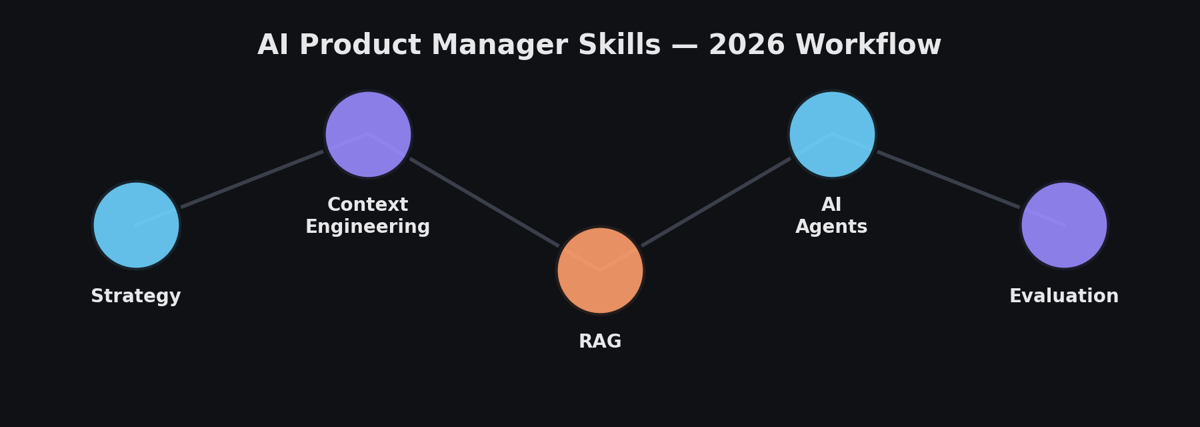
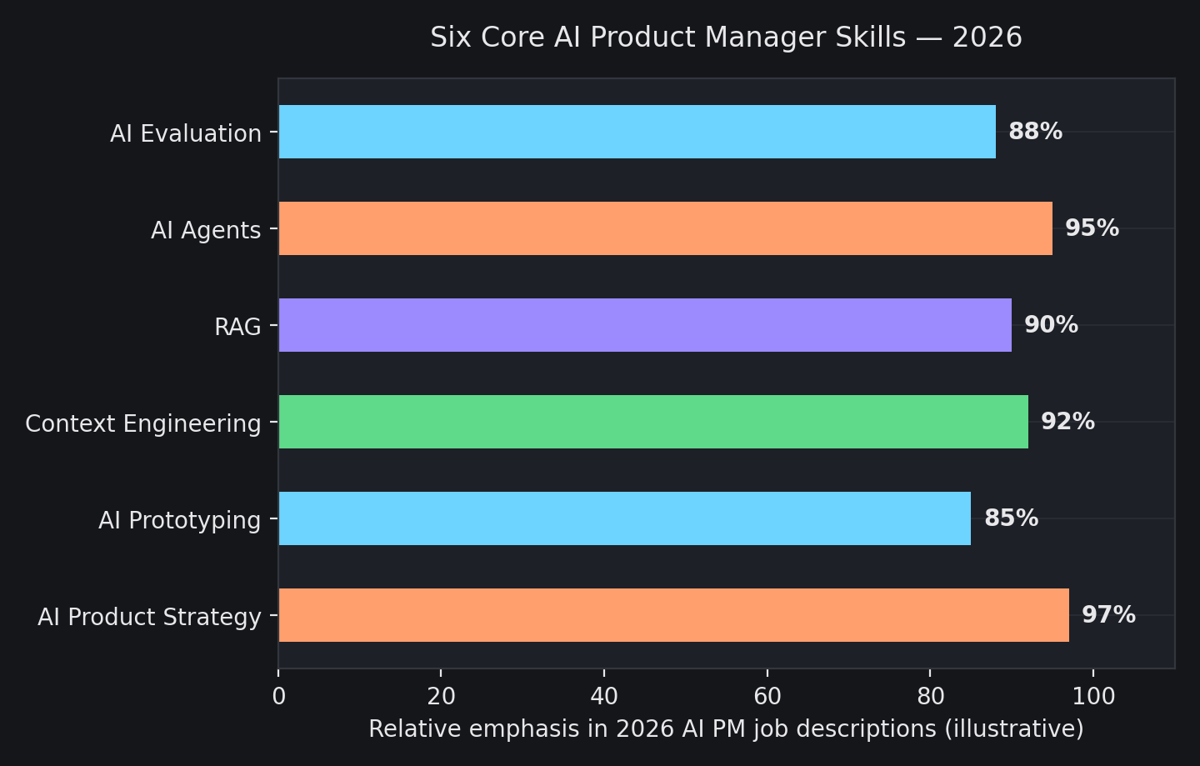
• There are six main skills that are important, in 2026: AI Product Strategy, AI Prototyping, Context Engineering, RAG, AI Agents and AI Evaluation
• To work with AI you need to have some skills: you need to know about data like statistics and machine learning and you need to know how to use models and work with APIs
• You also need to have some business skills: you need to know how to talk about money like how to measure if something is worth the cost. You need to know about ethics and rules
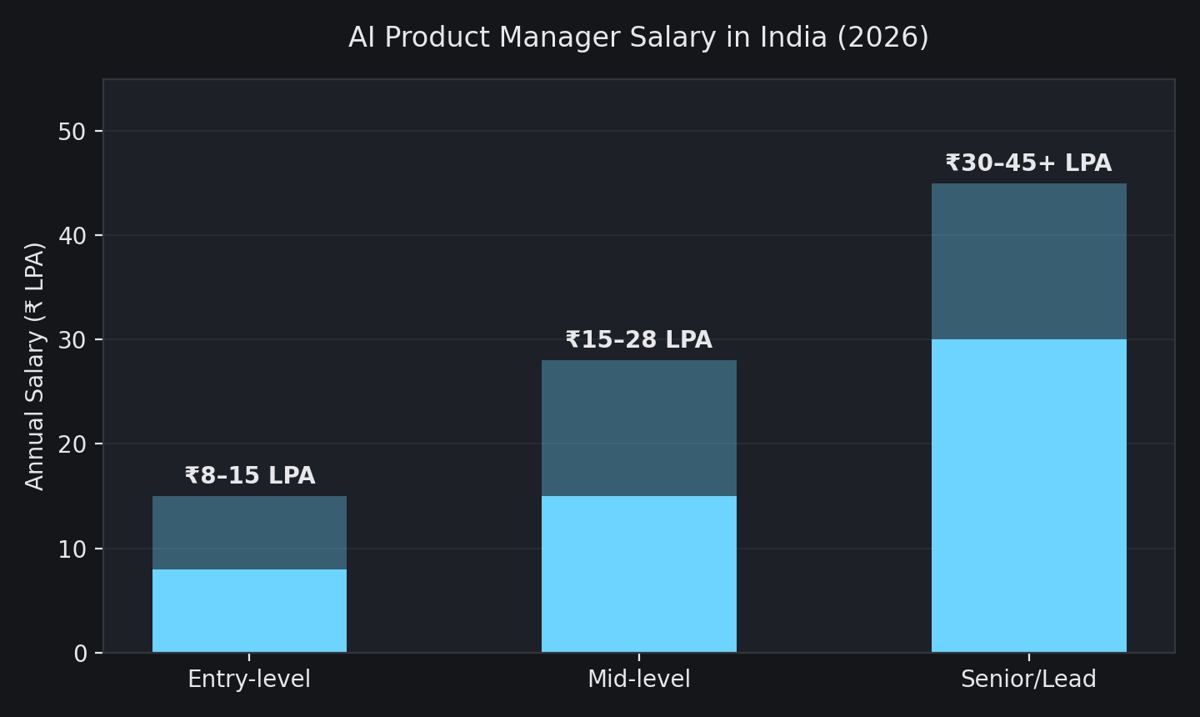
• In India people who work with AI can get paid: if you are just starting out you can get around ₹8–15 LPA if you have some experience you can get around ₹15–28 LPA and if you are very experienced you can get ₹30 LPA or more
• The companies that hire people to work with AI are: technology companies, startups that focus on AI companies that work with money companies that work with health companies that sell things online companies that make software and companies that make things
• What companies really look for when they hire someone is: people who can get things done people who can make things better people who can lead teams and people who really understand AI, not just people who know how to use tools
Table of Contents
- What Is an AI Product Manager?
- Why AI Product Management Matters in 2026
- How AI Product Management Works: Step-by-Step
- Core Components of AI Product Manager Skills
- Tools AI Product Managers Use
- Real-World Examples & Use Cases
- AI Product Manager vs. Traditional Product Manager : Key Differences
- Best Practices for AI Product Managers
- Common Mistakes to Avoid
- FAQs About AI Product Manager Skills
- Final Summary & Next Steps
What Is an AI Product Manager?
An AI Product Manager is a kind of product leader. They help connect what the business needs and what the user needs with Artificial Intelligence and Machine Learning technology. The AI Product Manager guides the development and launch of products that use Artificial Intelligence. They also make strategy for these Artificial Intelligence products. They have an understanding of models and Large Language Models.
The AI Product Manager is different, from a product manager. Regular product managers focus on the features of a product.. AI Product Managers focus on the data and models that make the product work. They take care of the product from the time it is being trained to the time it is deployed. People are using it. They also keep an eye on how the product’s doing.
The AI Product Manager decides what makes the product successful. They use Artificial Intelligence metrics like accuracy and precision to measure success. They also use business metrics. The AI Product Manager has to think about issues and rules that govern Artificial Intelligence products. They have to make sure the product is fair and can be explained in a way that people understand.
Why AI Product Management Matters in 2026
Companies that make software are putting intelligence into their products. This is happening in lots of areas like services sold online, financial technology, online shopping, health technology and software for companies. But to add intelligence to products these companies need to know what to make why it is important how to measure if it is working and how to get it to customers.
Artificial intelligence is a part of many products now. It does things like detect fraud work with users and create interfaces. Artificial intelligence is important for how users experience products and for making money. This year artificial intelligence is becoming a part of making software. Companies need people in charge of products who can balance what the company wants to do what is technically possible and what is the right thing to do. The traditional role of product manager is changing because artificial intelligence is taking over some of those tasks.
The person in charge of intelligence products is a very desired job in the technology industry. This job pays well. Will be important, for a long time. AI product management is becoming a part of the technology industry. Companies are looking for people who can lead intelligence products and artificial intelligence is a big part of what these companies do.
How AI Product Management Works: Step-by-Step
1. The AI Product Strategy is to find the important uses of Artificial Intelligence that match what the company wants to achieve.
2. We have to do Feasibility Framing to see if we have data if the models are too complicated and if it is worth the money we spend on it.
3. Requirements Definition means we take the problems the company is facing and figure out what data and models we need to solve them.
4. For Cross-Functional Leadership we work with different people like data scientists and designers to make sure everyone is on the same page.
5. We have to define and track Metrics and Evaluation to see how well the models are doing, like how much better they’re how many mistakes they make, as well as how the company is doing.
6. When we do Deployment and Experimentation we have to watch how the new models are doing try them out in groups and slowly introduce them to everyone.
7. After we launch something we have to do Monitoring and Iteration to make sure the models are still working well and not getting worse over time.
The biggest changes in 2026 include Artificial Intelligence that can think for itself replacing chatbots MCP making it standard how Artificial Intelligence connects to other tools vibe coding letting product managers build and try out new ideas without needing engineers and the product manager role changing to be more about working with Artificial Intelligence rather, than just managing features.
Core Components of AI Product Manager Skills
Technical and Data Skills
| Skill | What It Means |
| Data Literacy | Statistics fundamentals, distributions, sampling |
| ML Pipelines | Understanding training, validation, and inference |
| Model Evaluation | Precision/recall, ROC-AUC, calibration |
| API & Integration | Knowing how models are consumed in products |
| AI Prototyping | Building prototypes using no-code/vibe coding |
| Context Engineering | Managing how AI understands context |
| RAG | Building systems that retrieve + generate |
| AI Agents | Orchestrating autonomous multi-step task systems |
| AI Evaluation | Testing and validating AI outputs |
Product and Business Skills
• Dealing with uncertainty when it comes to planning for the future of Artificial Intelligence: Finding a way through the parts of Artificial Intelligence development
• Weighing the good and bad of spending money: Deciding what is more important how much it costs to use computers how long it takes to get results or how accurate those results are
• Measuring how well Artificial Intelligence is doing: Figuring out what numbers show that Artificial Intelligence is helping to make money or keep customers
• Artificial Intelligence ethics and governance: Making sure to prevent bias be fair and be transparent when using Artificial Intelligence
• Keeping peoples information private and following the rules: This is especially important when it comes to industries that have a lot of rules to follow
Communication and Leadership Skills
• You need to explain choices to people who are not technical experts in a way that makes sense to them.
• Get all the teams working together to try things and make changes as you go along.
• Be able to lead when thingsre not clear this is a key thing that sets you apart from others.
• Show that you have actually released products made things better and helped customers with their problems.
• Demonstrate that you can work with groups and that you have a practical understanding of artificial intelligence, which is what artificial intelligence is all, about and that is artificial intelligence.
Tools AI Product Managers Use
| Category | Tools |
| Analytics | SQL, Looker, Tableau |
| Collaboration | Jira, Confluence, Miro |
| Prototyping | Figma (plus vibe coding tools) |
| Model Monitoring | MLflow, Datadog, custom dashboards |
| Research | AI-synthesized interview/survey tools |
| Documentation | AI-drafted specs maintenance |
Real-World Examples & Use Cases
Example 1: Fintech Fraud Detection AI
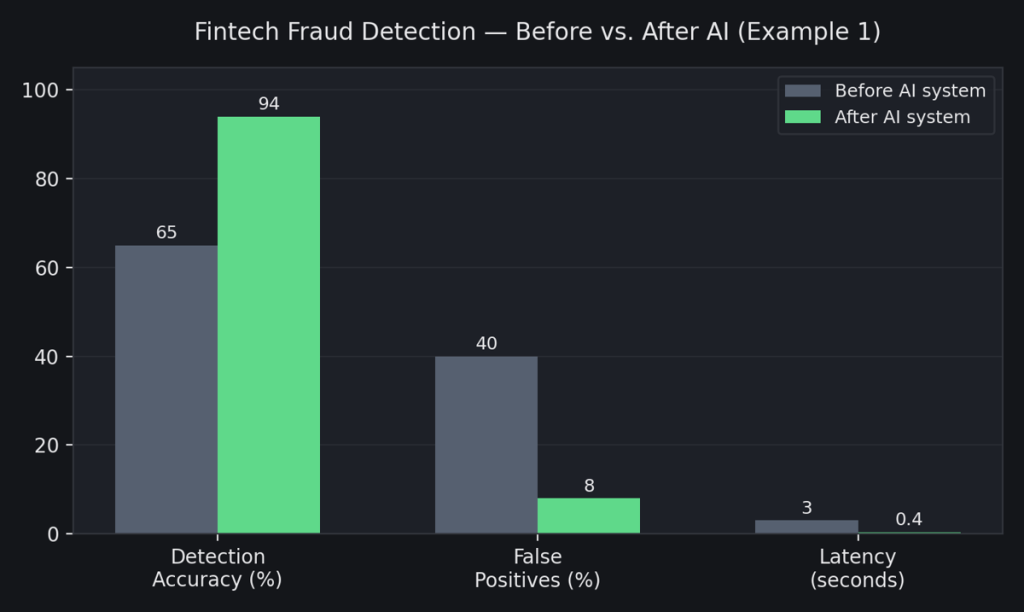
Problem: A major Indian fintech company is losing an amount, about ₹50 crore every year because of fraud. This happens with a lot of mistakes. 40% Of the time they wrongly flag transactions as fraud. Also their system only catches fraud 65% of the time.
Solution: To solve this we used an AI-powered machine learning system led by a project manager. This system uses a combination of models creates new features in real-time and tests different approaches.
Result: After using this system the companys fraud detection accuracy greatly improved to 94%. The number of positives dropped to just 8%. The time it takes to process transactions or latency reduced to 0.4 seconds. As a result theirmonthly losses due to fraud went down from ₹4.2 crore to ₹0.3 crore.
Impact: This change saved the company ₹48 crore every year. More transactions were completed successfully a 15% increase. Customers are much happier rating their satisfaction at 4.6 out of 5 up from 3.2. The company also got a return, on investment 240% and gained 2 million new users.
Example 2: Health tech Diagnostic AI for Radiology
Problem: A hospital network in Uttarakhand had a lot of problems. They were late in diagnosing patients 30% of the time. They were also not good at finding pneumonia only getting it right 58% of the time. The doctors had to look at, over 150 X-ray images every day, which was a lot. All these mistakes cost them around ₹12 crore.
Solution: So an AI company called AI PM made a platform to help doctors. They used a system called RAG and a type of computer learning called CNN. They trained it on 500,000 X-ray images. They also made the AI think in a way and made a workflow for it to automatically sort patients.
Result: This really helped. Now they can find pneumonia and other problems 92% of the time. It used to take 48 hours to get a diagnosis. Now it only takes 12 minutes. The doctors can look at 350 images a day now of 150. Patients don’t have to wait long now it’s only 2 hours instead of 7 days.. The mistakes went down from 8% to 2%.
Impact: This saved the hospital ₹10.8 crore every year. They were able to diagnose 3,200 patients. There were 40% people who had to go to the ICU. They were able to expand to 12 locations.. The survival rate went up by 23%.
Example 3: E-commerce Personalization Engine
Problem: We have a platform with 50 million users. Only 2.1 percent of them actually buy something. This is not good because the industry average is 3.5 percent. We also have a problem with people clicking on things 0.8 percent of people click.. When they do put things in their cart 78 percent of the time they do not buy it. This is causing us to lose 200 crore rupees.
Solution: Our team made a computer program using artificial intelligence to help us. This program suggests products to users. We also used intelligence to change prices on the fly. We made a system to know more about our products. And we used a tool to watch everything that is happening.
Result: After we did this things got a lot better. More people bought things 4.3 percent of 2.1 percent. More people clicked on things 3.2 percent of 0.8 percent.. People did not leave their carts as much 52 percent instead of 78 percent. We also kept users 58 percent instead of 34 percent.. People spent more money 1,650 rupees instead of 1,200 rupees.
Impact: We made a lot money, 285 crore rupees extra. This is a good return, on our investment 425 percent. We also had 8.5 million purchases.. We got 24 million new users, which is 32 percent growth. People were also really happy our score went from 28 to 62.
Industries Hiring AI Product Managers
| Industry | AI Application Examples |
| Big Tech & Cloud | AI infrastructure, platform services |
| AI-First Startups | Native AI products, agentic workflows |
| Fintech | Fraud detection, risk assessment, AI copilots [Example 1] |
| Healthtech | Diagnostic AI, patient monitoring, compliance [Example 2] |
| E-commerce | Personalization, recommendation engines [Example 3] |
| SaaS Platforms | AI features embedded in products [Example 4] |
| Manufacturing | Predictive maintenance, IoT integration [Example 5] |
Companies hire people who prove they shipped products, improved metrics, solved real customer pain, worked cross-functionally, understand AI practically, and can lead under ambiguity.
AI Product Manager vs. Traditional Product Manager: Key Differences
| Aspect | AI Product Management | Traditional Product Management |
| Focus | Data-centric: data readiness, quality, model performance | Feature-centric: defines and ships product features |
| Lifecycle | Continuous monitoring, retraining, iteration | Released once, maintained over time |
| Success Metrics | Accuracy, fairness, explainability, reliability + business metrics | Adoption, sales, revenue, user engagement |
| Risk Level | Higher uncertainty with stronger governance, compliance, ethics | Lower uncertainty with minimal compliance needs |
| Work Nature | AI orchestration, workflow management | Backlog management, user stories, sprint coordination |
Many experienced PMs are scaling up to AI product management.
Best Practices for AI Product Managers
Top 3 Best Practices for 2026
1. You should be in charge of the workflow, not the model. The thing is models are going to become really common and not very special. What will make you stand out is how you get everything to work together the information you have, about your area and how you deal with changes. Workflow is what you need to focus on.
2. It is an idea to invest in things that help you make decisions. You should make good knowledge graphs, ontologies and process maps. These things will help you get the information you need and make choices.
3. You should try to use people to do the things that people’re good at not just replace them with machines. What you need to do is give people the time to think about the decisions and use machines to do the boring tasks.. It is important to make it clear when a machine is going to stop and a person needs to take over.
Additional Best Practices
• First you need to understand the basics of product management this includes things like finding out what people want making a plan for the product and figuring out how to measure if it is working. Product management is really important so learning about product management fundamentals is key.
• Then you should work on understanding data by doing projects that involve looking at numbers and information this will help you build data literacy and understand data better.
• You should learn about artificial intelligence concepts that are related to products but you do not need to learn how to code the models just understand the artificial intelligence concepts.
• After that you should take a course, about intelligence product management that has real life examples this will help you learn more about artificial intelligence product management.
• Finally you should show what you can do by putting intelligence driven product initiatives on your resume this will help you show the impact of artificial intelligence driven product initiatives and what you have learned about artificial intelligence product management and product management.
Common Mistakes: What to Avoid
Mistakes That Will Make You Fail in 2026
| Mistake | Why It’s Problematic |
| Learning tools but not judgment | Tools commoditize; judgment is the moat |
| Memorizing frameworks but not leadership | Companies need leaders who navigate ambiguity |
| Only attending cheap webinars | 9 Rupees YouTube webinars don’t prove capability |
| Ignoring data quality | AI models are only good based on training data |
| Not monitoring model drift | Models lose accuracy as user behavior changes |
| Skipping ethics/governance | Regulatory constraints can block products |
| Expecting quick AI results | AI development needs experimentation and iteration |
FAQs About AI Product Manager Skills
Q1: What do AI product managers do?
AI product managers create, build and grow AI features. They make sure business goals match with data, models and what users need. They handle AI plans, model life cycles, metrics and deployment. AI product managers are key in making AI products.
Q2: How do I become an AI product manager?
To become an AI product manager start by learning product management basics. Then get familiar with data. Next learn AI concepts that’re important for products. Work on projects that use AI. Take a course on AI product management. Show what you have achieved on your resume. AI product management is a growing field.
Q3: What is the salary of an AI product manager in India?
• Entry-level AI product managers earn ₹8–15 LPA.
• Mid-level AI product managers earn ₹15–28 LPA.
• Senior or lead AI product managers earn ₹30 LPA or more with extra benefits. Globally AI product managers earn over $130,000 per year. AI product managers are, in demand.
Q4: What are the top 3 skills for an AI product manager?
1. Being able to solve problems
2. Talking to stakeholders
3. Making decisions based on data
For someone who’s an AI product manager it is also very important to understand AI metrics and how the models work. Understanding AI metrics and model behavior is really critical, for AI product managers.
Q5: What are the six core AI skills for product in 2026?
1. AI Product Strategy is really important for product.
2. You need to know about AI Prototyping to make things work.
3. Context Engineering is also something you have to think about when it comes to AI skills for product.
4. Then there is Retrieval-Augmented Generation, which people also call RAG for short. I will call it Retrieval-Augmented Generation because that is the full name.
5. AI Agents are another AI skill for product that you should know about.
6. Lastly you have to evaluate your AI skills for product, which’s where AI Evaluation comes in and that is why AI Evaluation is so important for AI skills, for product specifically AI Evaluation.
Q6: Which industries are looking for AI product managers?
* Big tech companies
* Cloud providers
* Startups focused on AI
* Platforms that offer software as a service
* Financial technology companies
* Health technology companies
* E-commerce businesses
* Companies that provide analytics
Q7: What is changing in AI product management in 2026?
The biggest shift is in AI systems. These systems can now act on their own. They can plan, reason and execute tasks. This is a move from research to real-world use.
Q8: Do AI product managers need to know how to code?
No you do not have to code the models yourself.. You must ask the right questions. You need to understand how APIs and integrations work. There are also tools that let product managers build prototypes, on their own without needing engineers.
Final Summary & Next Steps
In the year 2026 big companies will hire AI Product Managers who’re really good at agentic AI context engineering and RAG systems. They also need to show that they have actually launched AI products that got good results.
The main skills that AI Product Managers need to have are AI Strategy, Prototyping, Context Engineering, RAG, AI Agents and Evaluation.
Companies want to hire people who have made products and improved results. Not people who just attend webinars.
The salary for AI Product Managers in India can be anywhere from ₹8 lakh to ₹30 lakh or more, per year.
Your Path to Becoming an AI Product Manager
To become an AI Product Manager you need to follow a plan. First you have to understand the basics of a product. Then you have to learn about data and how to analyze it by working on projects.
You also need to learn about Artificial Intelligence. How it applies to products.
It is an idea to take a course on Artificial Intelligence Product Management that includes real life examples.
After that you have to get ready for job interviews by learning the questions that are asked to AI Product Managers.
Finally you have to show that you can make a difference, with Artificial Intelligence projects.
This will help you become an AI Product Manager.
🎓 Recommended Course: One Leap’s AI Product Management Program
Why this course is perfect for 2026:
• You will learn Artificial Intelligence by doing it not just watching. This is a hands-on approach that matches what the industry is looking for
• This course covers the Artificial Intelligence that can act on its own MCP and vibe coding. These are the things that will be popular in 2026
• The course has six main parts: you will learn how to come up with a plan make prototypes understand the context, RAG, Agents and how to evaluate things
• You will work on real projects. You will actually make Artificial Intelligence products that you can show to people to prove that you are capable
• The things you learn will be the same things that are used in the industry. You will study real examples from companies that work with money, health and software
• You will also learn about using Artificial Intelligence in a way and how to follow the rules. This is very important, for companies that have to follow a lot of regulations
Outcome: After this you will be the kind of Artificial Intelligence expert that every company needs. You will have a portfolio of real Artificial Intelligence projects and you will really know how to use the tools.
Contact One Leap Dehradun to enroll and position yourself for the ₹30 LPA+ senior AI PM roles.
Stay updated with the latest AI, Data Science, and Automation insights by following OneLeap on LinkedIn and Instagram.
Sources & References
- Futurense – AI Product Manager: Role, Skills, Salary, Jobs & More
- Institute PM – AI Product Management in 2026: Trends, Tools, and What’s Changed
- GrowthX – AI Skills to Learn in 2026 for Product
- Medium (The Why Guy) – The State of AI Product Management in 2026 and What Comes Next
- LinkedIn (Balaji T) – AI Product Manager in 2026: The Mindset and Skillset That Will Define Tomorrow’s Product Leaders
- Maven – AI PM Bootcamp & Certification

Leave a Reply