
RAG systems are really important for business intelligence. They let people ask questions in a way and get answers that are based on good data that is current. Of just looking at old dashboards or information that is stored RAG systems get information, from real places and use artificial intelligence to create new information. This makes the information more accurate and helpful for people to make decisions. RAG systems are a deal because they use real information and artificial intelligence to give people the information they need.
Key Takeaways
- RAG is a way to link intelligence models to outside sources of information that are reliable.
- This makes the answers from RAG accurate up to date and trustworthy than what you get from regular language models.
- People who do research can use RAG to do their work make reports and come up with new ideas.
- OneLeap has classes like Data Analytics with GenAI and Generative AI & NLP that work well with the way people are now doing analytics, with RAG and other tools.
Table of Contents
- Introduction
- Definition
- Why It Matters
- How It Works
- Core Components
- Tools and Technologies
- Real Examples
- Comparison: RAG vs Traditional BI
- Best Practices
- Common Mistakes
- FAQs
- Final Summary
Definition
RAG or Retrieval Augmented Generation is a way that computers can get information and make text. It does this by looking at things it already knows and by looking at other sources of information. This means the computer can answer questions using information from outside not what it has in its memory.
IBM says that RAG helps computers get information from places like company data, journals and special sets of information. This helps the computer give answers.
For people who look at numbers and data this is a change. Now they can ask the computer to answer their questions using the most up, to date information. OneLeap has some learning programs that teach people about using intelligence for numbers and data work. These programs are useful because they help people get ready to use intelligence in a practical way.
Why It Matters
Business intelligence usually relies on dashboards and reports and people looking at the information manually. RAG is different because it makes business intelligence more like a conversation. It is always up to date and relevant, to what is happening. This is important because people who look at the information are not just supposed to give reports they are supposed to explain what is going on and why it is important and what people should do next.
RAG helps with this by making sure the answers are based on information and not just something that someone made up or that is old. RAG helps teams make decisions faster using the information they already have.
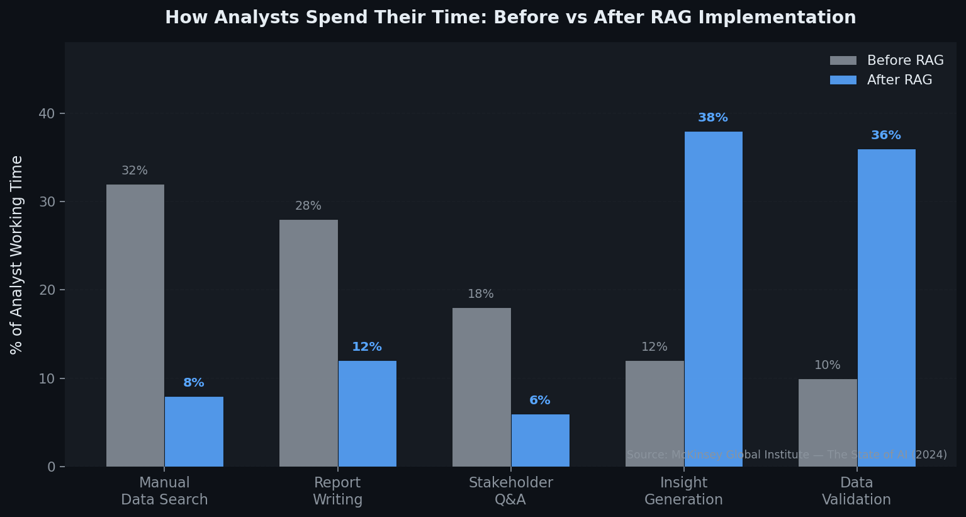
How It Works
- Someone asks a company a question in a way.
- The system looks at trusted places for information to find something related.
- The system adds the information it found to the question that was asked.
- The language model comes up with an answer using the question and the information it found.
- The answer is given with accuracy and it is more up, to date and easy to check where it came from.
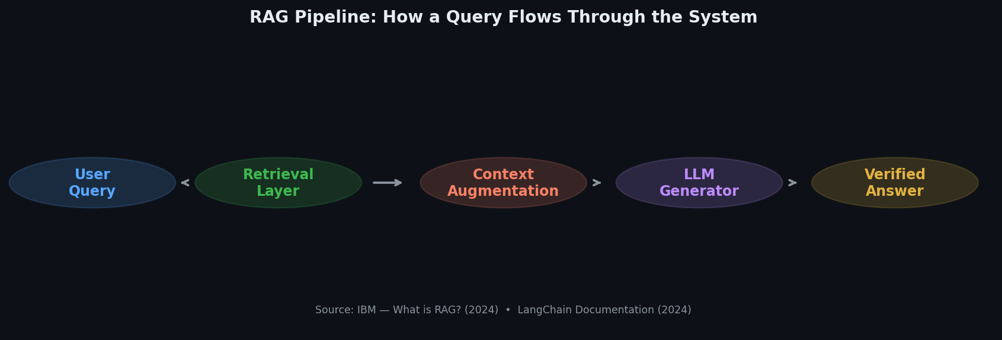
In business intelligence this workflow is really useful because it can be placed on top of business intelligence structured dashboards and business intelligence internal documents and business intelligence policies and business intelligence real-time data feeds. This makes business intelligence workflow especially useful, for business intelligence analysts who need to get answers without losing the governance of business intelligence or the context of business intelligence.
Core Components
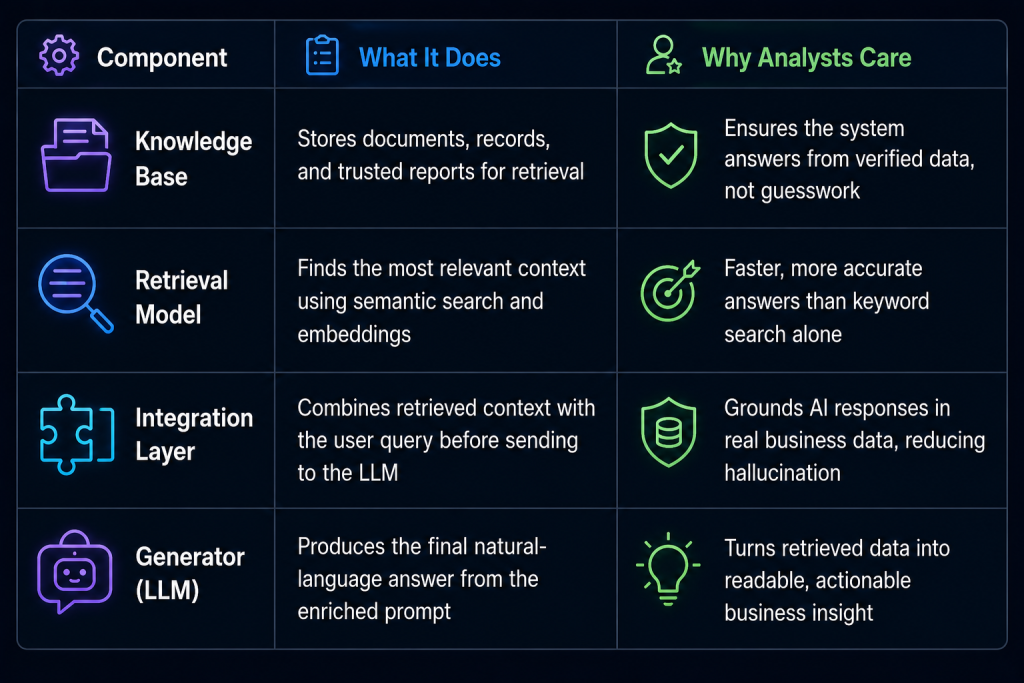
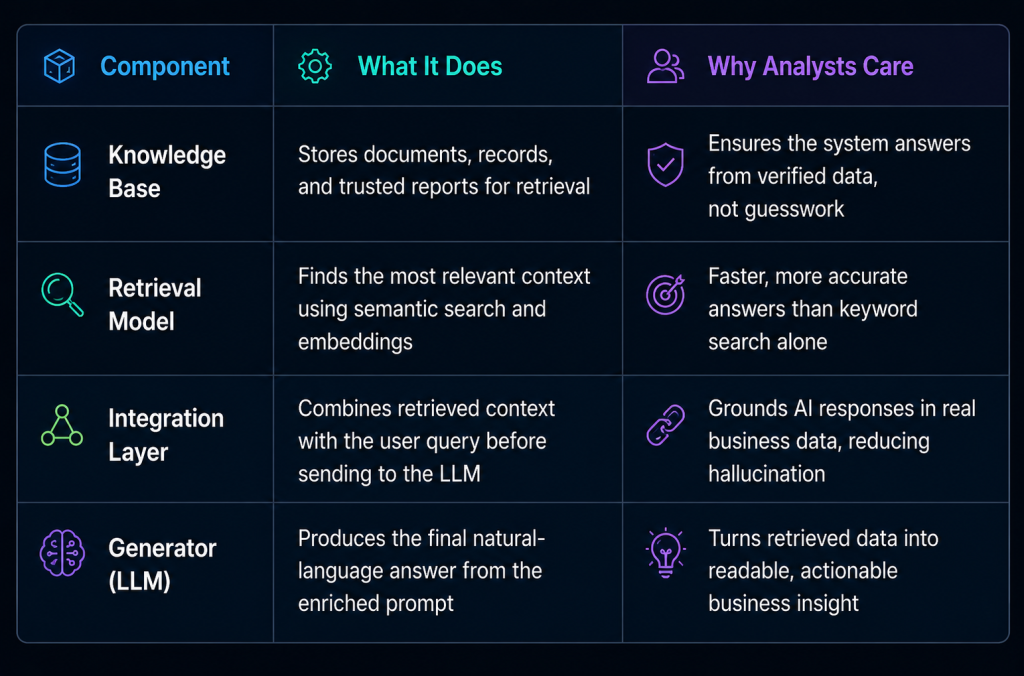
Knowledge base
This is where the system stores all its information, like documents, records and reports. IBM says that RAG can work with things like PDFs, guides and websites and turn them into data.
Retrieval model
This part finds the information for what the user is asking. It uses a kind of search that looks for the meaning behind the question, not just the words.
Integration layer
This layer puts together the information that was found and what the user asked. IBM says it’s the important part of RAG because it helps find the right information and generate an answer.
Generator
The generator is the tool that creates the answer. In a business setting it could be a model that summarizes trends explains why numbers changed or answers questions, about how things are running.
Tools and Technologies
RAG systems usually work with databases that store information in a way like vector databases. They also use things like embedding models and semantic search to help them understand what people are looking for. Some people use frameworks like LangChain or LlamaIndex to make all these things work together.
RAG systems also work with language models, like GPT, Claude or Llama. IBM says that big companies can use RAG with these language models.
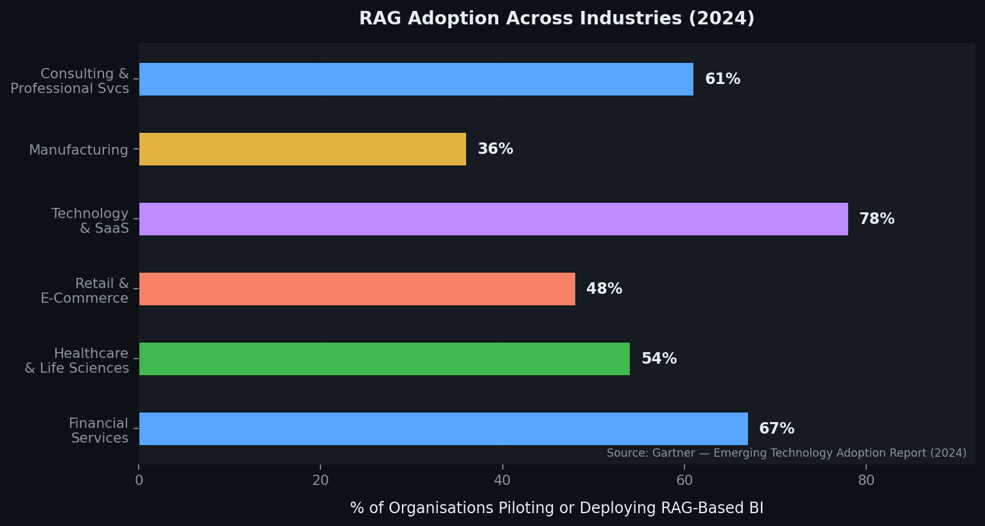
For analysts this ecosystem works alongside tools like Power BI which’re still useful for making dashboards and reports. OneLeap’s courses on Data Analytics with GenAI and Generative AI & NLP are a fit for learners who want to know about both the analytics tools and the AI part.
These courses help learners understand how analytics and AI work together. The analytics. Ai layer are important for analysts to learn. Power BI and similar tools are still important for creating dashboards and reports. OneLeap’s courses cover both analytics and AI making them a good choice, for learners.
Real Examples
A finance analyst can ask a system that uses RAG “What made our revenue go down month?”. The system will give them an answer based on the latest sales numbers, company policies and how we did in the past. IBM says that RAG is really helpful for looking at markets making products and doing research because it can get information from the most up to date and trustworthy sources.
A product analyst can look at what customers are saying, notes, from when we released new versions and support tickets to make a list of the problems people are having with our features. ThoughtSpot says that RAG is especially good when people need answers that show what is really going on in the business not just what the computer model learned from data.
Comparison Section
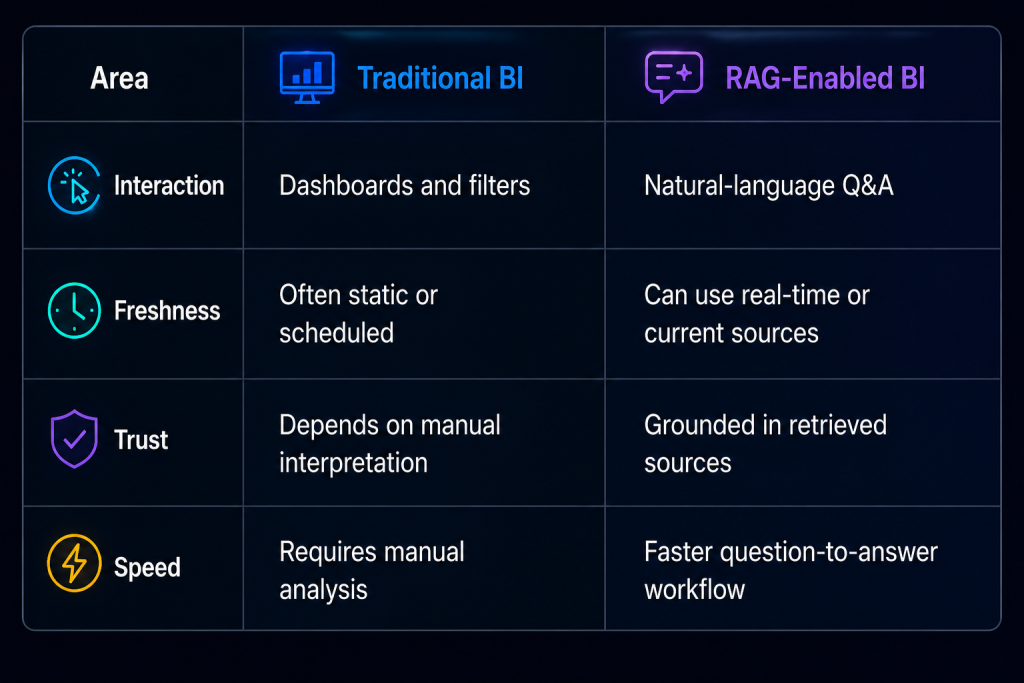
Traditional Business Intelligence is still really useful for making reports that have a lot of structure. Rag Business Intelligence adds a layer that lets people have conversations and that makes it a lot faster to find new insights. That is why many teams think of RAG Business Intelligence as the step forward rather, than something that replaces Traditional Business Intelligence.
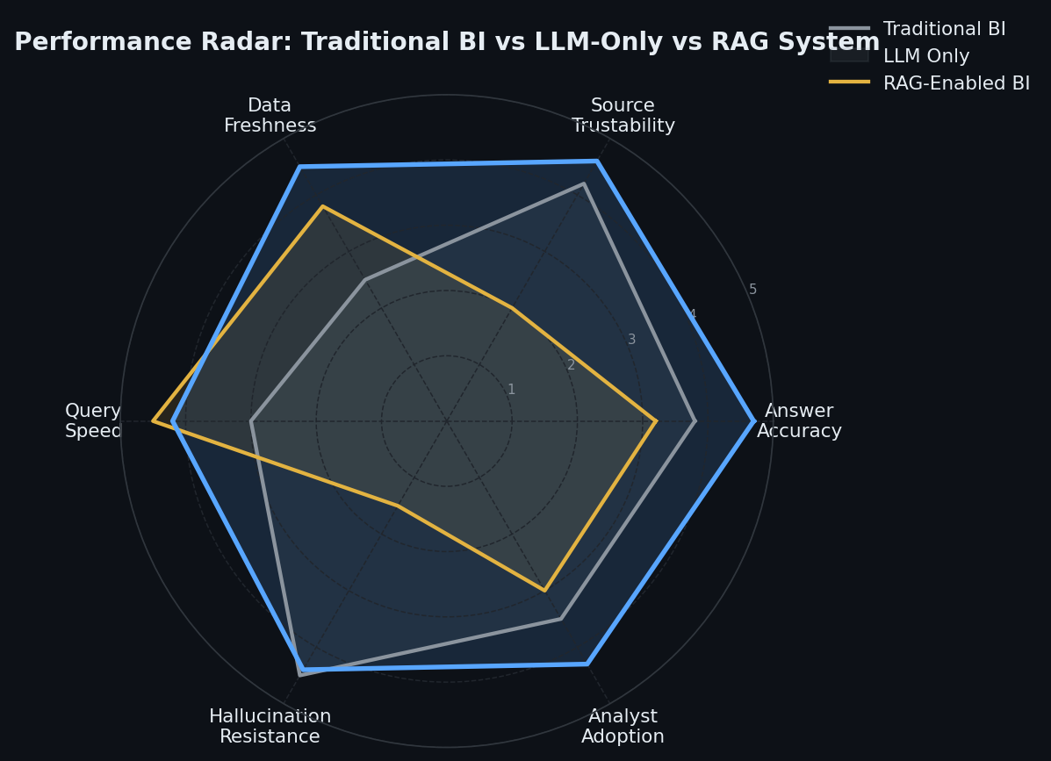
Business Value Metrics — Traditional BI vs RAG-Enabled BI
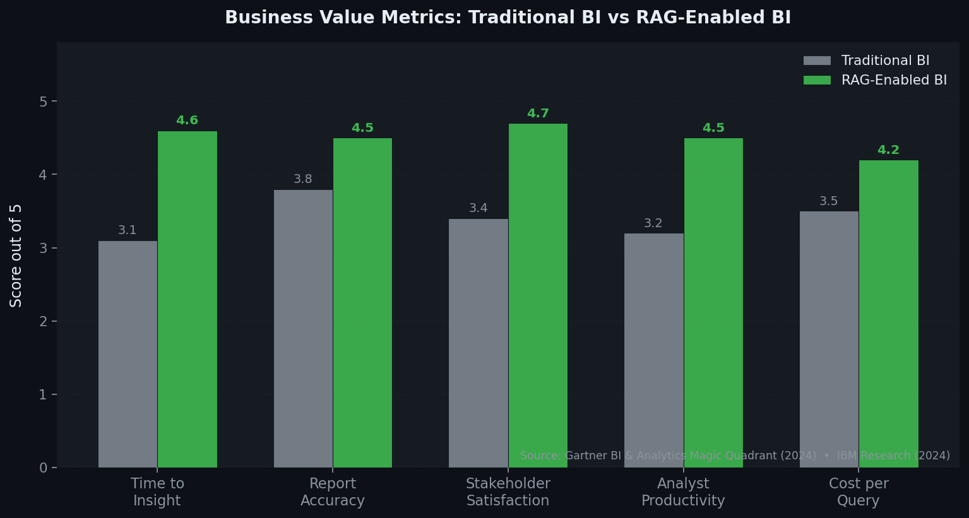
Traditional BI vs RAG-Enabled BI
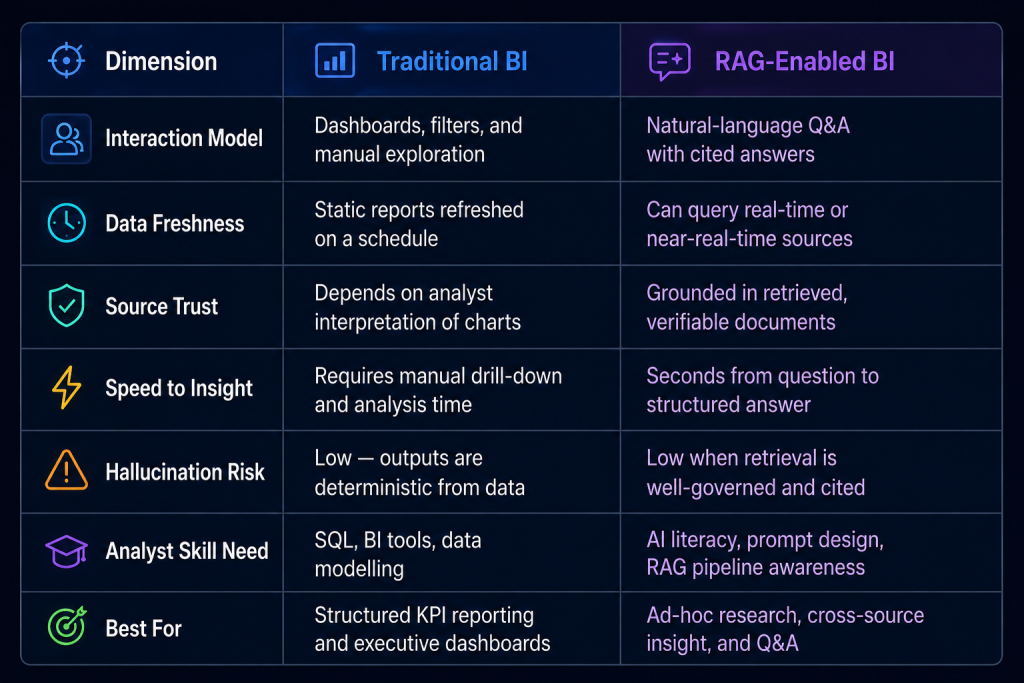
Best Practices
- We should get our information from sources that we know are correct and trustworthy.
- It is important to keep our knowledge bases updated so the answers we get are always current.
- When we build the system it should be able to tell us where it got the information from.
- Let us begin with tasks like helping with support questions or explaining reports and key performance indicators.
- We need to teach the people who analyze the data how to use both business intelligence and artificial intelligence. We can do this with hands-on classes, like the ones that OneLeap offers.
Common Mistakes
People often think that RAG is a solution that always gives the right answers. That is not true. IBM says that RAG helps reduce mistakes. It does not mean the system will never make an error.
Another problem is when people use old information. If the system gets data the answer it gives will also be bad. That is why it is very important to make sure the information we use is good especially when we are using RAG for business things.
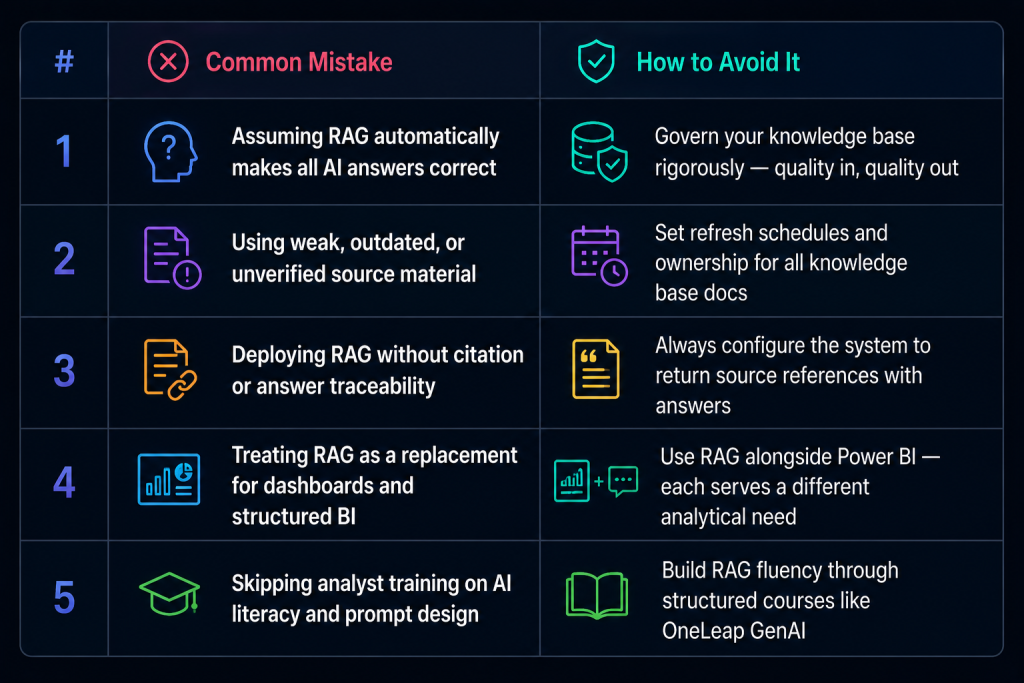
FAQs
1:What is RAG in terms?
RAG is a way for Artificial Intelligence to look up information before it answers a question so the answer is more accurate and based on real information.;:
2:Why is RAG important for people who analyze data?
Because it helps these people get answers from business information faster. These answers are more trustworthy. They do not have to rely on old dashboards or search for information manually.
3:Is RAG replacing Power BI?
No. Power BI is still useful for making dashboards and reports while RAG adds a way to talk to the information and documents.
4:Which course should I take to learn about RAG?
You can take OneLeap’s Data Analytics with GenAI course or the Generative AI & NLP course. These courses are good for people who want to learn about using Artificial Intelligence for analyzing information.
5:Can RAG tell us where it gets its information from?
Yes. IBM says that RAG systems can tell us where they get their information, from so we can check the answers and look at the information if we want to.
Final Summary
RAG systems are really the big thing in business intelligence. They bring together information that you can trust with answers that are created by intelligence. This makes it easier for people to talk about analytics. It is more up to date. It is also more useful when you need to make business decisions. The good thing is that it still comes from sources that you can verify.
OneLeap is a fit for this topic. They have courses on Data Analytics with GenAI and Generative AI and NLP. These courses can help people learn the skills they need to do analytics work with the help of intelligence. If you are an analyst and you want to stay then learning about business intelligence and RAG systems is a good next step, for you.

Leave a Reply