
Introduction
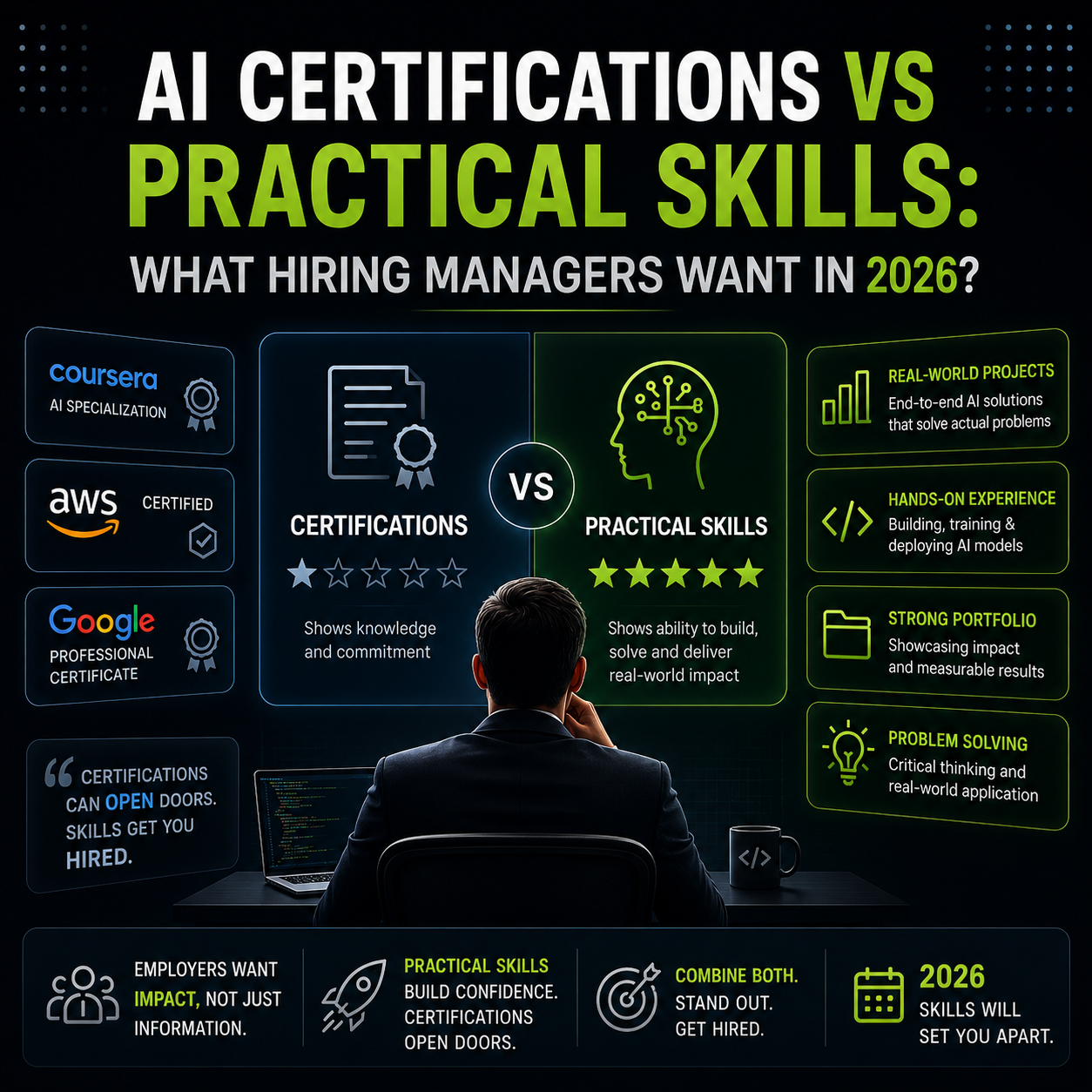
AI Certifications vs Practical Skills in the year 2026 employers want people who can actually build intelligence systems. They do not just want people who can pass exams or finish courses. Getting a certificate can help you get noticed by employers. What really matters to them is that you have the skills to solve problems that the business is facing. You should be able to work with data and create solutions that actually work.
For jobs that involve intelligence it is very important that you can put systems in place check if they are working make them better and keep them running. This is more important than having a certificate on your profile.
This is why people are talking about intelligence careers in a different way now. A certificate just shows that you learned about something. If you can show a project you worked on that shows you can actually use what you learned in a real situation. For people who just graduated people who are already working software engineers, data scientists, machine learning engineers and people who are changing careers, in India this makes a difference. It can be the reason why your resume is chosen or ignored.
Key Takeaways
- Certifications are helpful. They are just one piece of what makes you employable.
- Having skills means you can actually use AI in everyday situations.
- Most employers care more about seeing what you can do with AI, like projects and real-world experience than knowing the theory.
- The top candidates are those who know the basics and can also put their knowledge into practice.
- When hiring for AI roles now employers want to see that you can solve problems, not just that you know how to write good prompts.
- OneLeap’s AI Engineering Mastery program focuses on learning by doing working on projects and getting ready for a career, in AI.
Table of Contents
- What are AI certifications and practical skills?
- Why practical skills matter more in hiring
- How employers evaluate AI candidates
- Core components of a strong AI profile
- Tools and technologies employers expect
- Real examples of job-ready AI work
- AI certifications vs practical skills comparison
- Best practices for becoming job-ready
- Common mistakes to avoid
- FAQs
- Final summary
What Are AI Certifications and Practical Skills?
AI certifications are like papers that you get when you finish a course or pass an exam. They prove that you learned about a subject and you know it enough to pass a test. When we talk about AI certifications we mean that you have credentials in this field. Practical skills are different these are the things you can actually do with what you learned, like building something fixing a problem or making something that works. AI certifications are important because they show that you have the knowledge and practical skills are important because they show that you can use that knowledge to get things done.
| Term | Simple meaning | Example |
| AI certification | Proof that you completed learning | A certificate after an AI course |
| Practical skill | Proof that you can apply knowledge | Building a RAG system or AI app |
| Portfolio | Proof that you can show work publicly | GitHub repo, demo, or case study |
The key difference is simple: certifications show exposure, while practical skills show execution.
Why Practical AI Skills Matter More in Hiring?
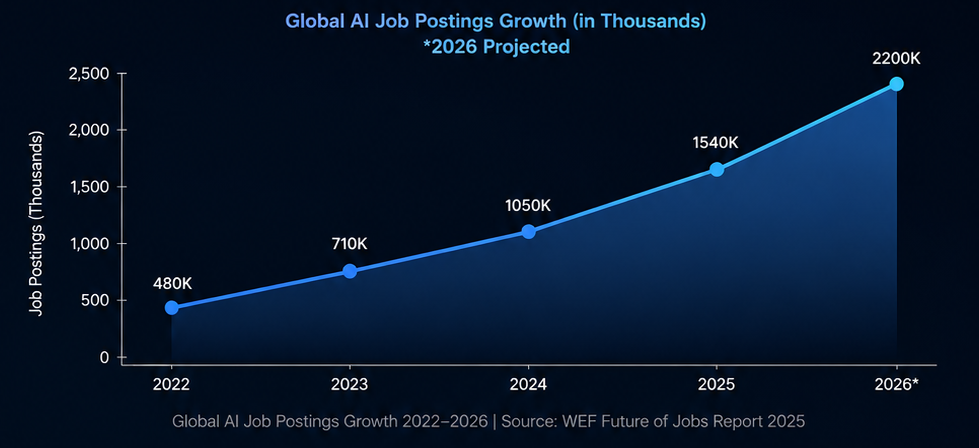
Artificial intelligence is no longer an idea. Companies want to use intelligence to automate things create search systems, artificial intelligence assistants, systems that recommend things and programs that are ready to use and can make things faster and more efficient. This means that the people who hire care more about what artificial intelligence can do than just, about the papers you have.
| Employer need | What practical skill shows |
| Reduce manual work | You can automate workflows |
| Improve customer support | You can build AI assistants |
| Search internal knowledge | You can build RAG systems |
| Scale AI safely | You understand guardrails and monitoring |
| Lower costs | You understand deployment and optimization |
A candidate who has only studied AI may understand the concept, but a candidate who has built and shipped AI solutions can contribute faster.
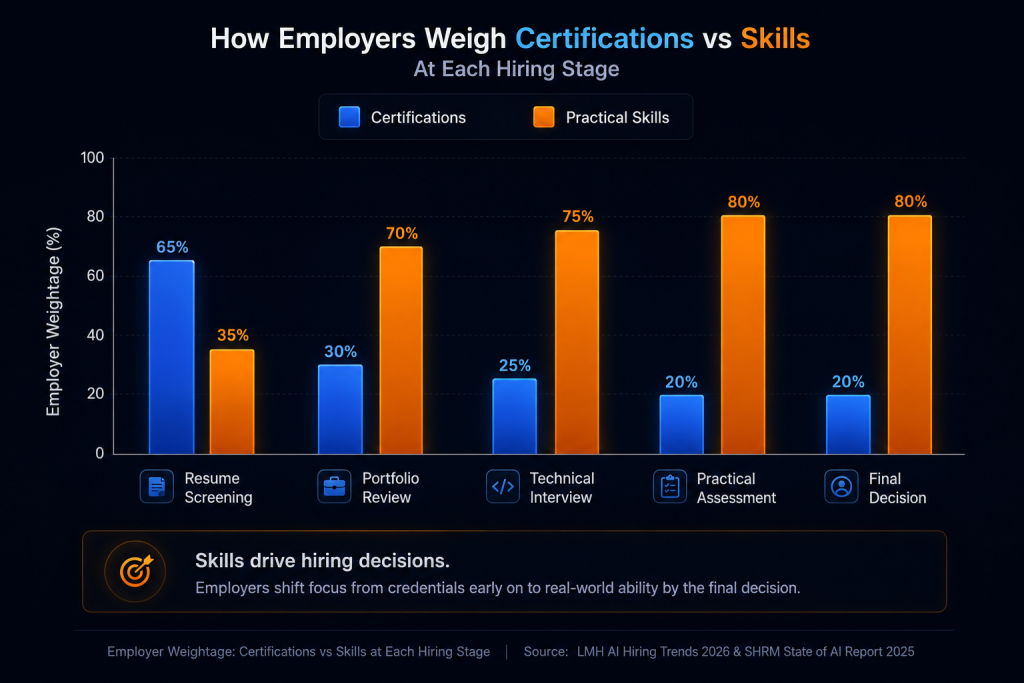
How Employers Evaluate AI Candidates in 2026?
When hiring teams look at AI candidates they do it in steps. First they want to know if the AI candidate has the information, about the field. Then they see if the AI candidate has actually made something that works. After that they think about how the AI candidate can talk about things solve problems and understand the business side of things. They really look at the AI candidate to see how well they can communicate and solve problems and if they get how the business works.
| Hiring stage | What employers check | What helps you stand out |
| Resume screening | Relevance and keywords | Projects, tools, results |
| Portfolio review | Proof of work | GitHub, demos, case studies |
| Technical interview | Depth of understanding | Architecture, evaluation, debugging |
| Practical assignment | Ability to solve problems | Clean implementation, clear logic |
| Final decision | Readiness and communication | Confidence, clarity, business sense |
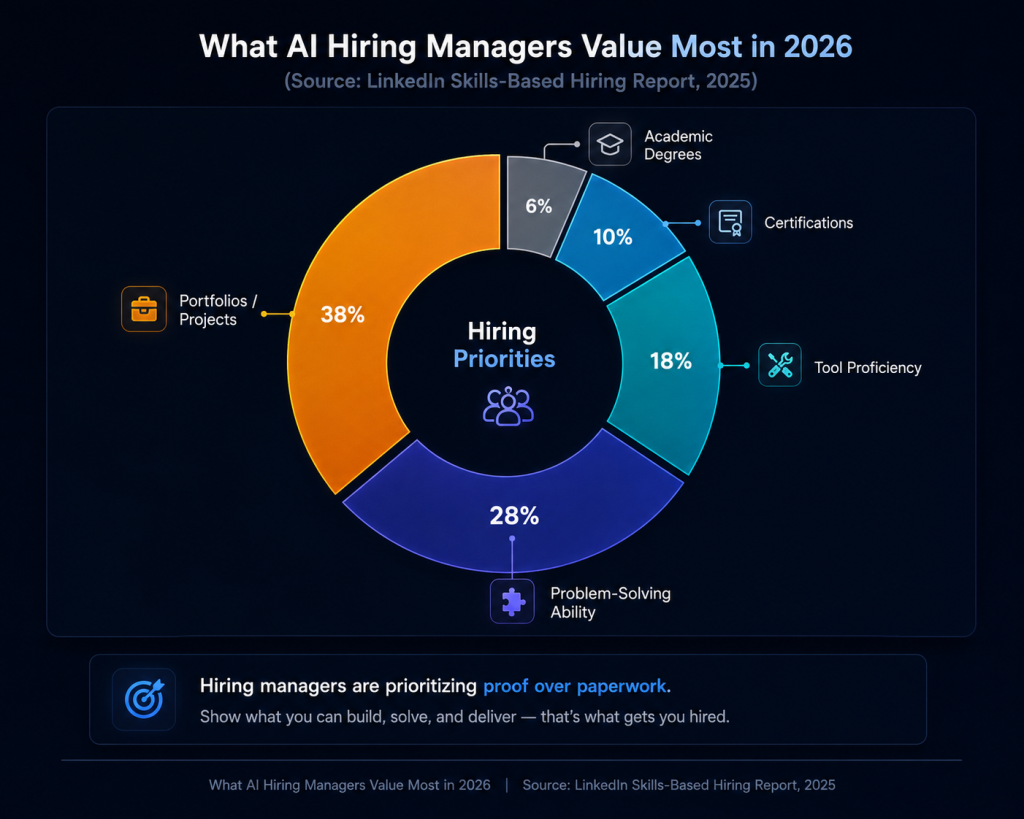
This is why a candidate who can explain deployment, monitoring, and optimization often stands out more than someone who only lists certificates.
Core Components of a Job-Ready AI Profile
A strong Artificial Intelligence profile usually includes the basics, the ability to actually build things knowledge of how things are made and a portfolio that shows real Artificial Intelligence work. That is also why learning by making a portfolio first has become so important, for Artificial Intelligence.
| Component | What it should show | Example |
| Fundamentals | Core AI understanding | ML, deep learning, transformers |
| Applied skills | Ability to build | Prompting, APIs, UI integration |
| Production skills | Ability to ship and scale | Deployment, monitoring, optimization |
| Portfolio | Proof of real work | Projects and case studies |
| Communication | Ability to explain decisions | Interview narratives and demos |
This is where OneLeap’s AI Engineering Mastery fits well. The program is built around live learning, hands-on labs, and production-grade projects, which helps learners move from theory to employable proof.
Essential Tools for Building Practical AI Skills
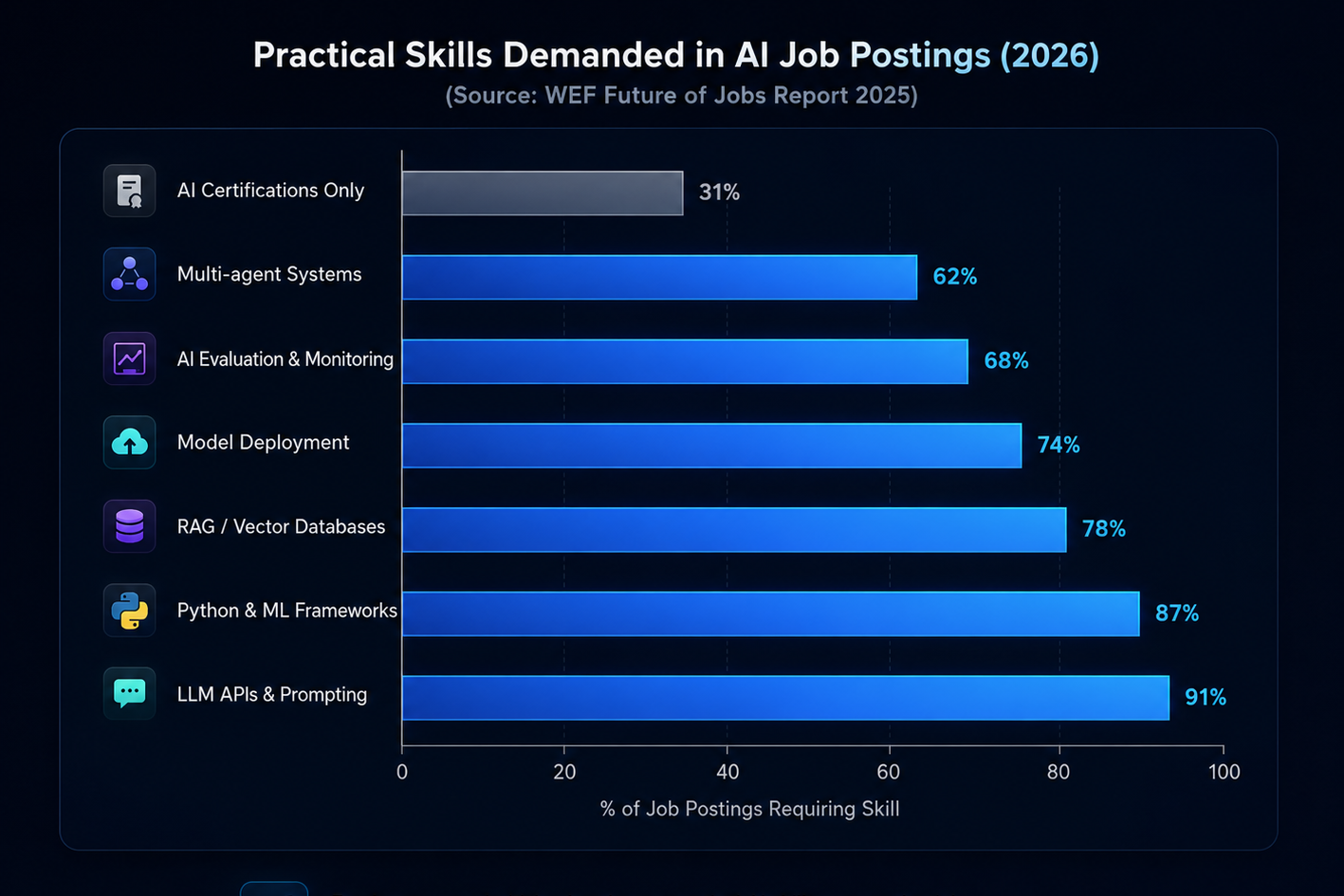
Employers want to see that you are familiar with the tools that people use when they do artificial intelligence work. You do not need to be an expert at every tool but you should have a good understanding of the artificial intelligence ecosystem, around building models getting the right data using those models and keeping an eye on how they are working. Employers want to know that you understand the intelligence ecosystem and the tools used in artificial intelligence work.
| Category | Tools mentioned in the brochure | Why they matter |
| Programming | Python | Core AI development language |
| Model building | PyTorch, TensorFlow | Training and experimentation |
| LLM development | OpenAI, Claude | Building AI products |
| Retrieval systems | Chroma, Pinecone, FAISS, Weaviate | RAG and semantic search |
| Orchestration | LangChain, LangGraph, LlamaIndex | Workflow and agent logic |
| Deployment | FastAPI, Docker, Kubernetes | Production readiness |
| Tracking and evaluation | MLflow, Weights & Biases | Experiment and model management |
| UI and demos | Streamlit, Gradio | Building usable interfaces |
Knowing tools is not the goal by itself. The real goal is to use the tools to solve problems in a way that mirrors workplace needs.
Real AI Career Examples That Show Practical Skill
If you want employers to take your AI profile seriously, your projects should show business relevance. The best projects are not toy demos. They reflect the kinds of problems companies actually pay to solve.
| Project type | What it demonstrates | Employer value |
| Enterprise RAG system | Retrieval, chunking, memory, evaluation | Useful for knowledge-heavy businesses |
| Multi-agent orchestrator | Tool use, coordination, state handling | Relevant to automation workflows |
| Fine-tuned domain model | Dataset curation and optimization | Shows model adaptation ability |
| AI safety dashboard | Guardrails, observability, failure handling | Important for production trust |
| Full-stack AI app | APIs, authentication, UI, deployment | Shows end-to-end ability |
The brochure for AI Engineering Mastery has a lot of project ideas. These projects are about things like building a transformer and testing how well it works with prompts. You can also make full-stack apps that use intelligence. The AI Engineering Mastery program also covers things like enterprise RAG. Making research agents that can work on their own.
AI Certifications vs Practical Skills: A Side-by-Side Comparison
| Factor | Certifications | Practical skills |
| Purpose | Show structured learning | Show real application |
| Hiring value | Helpful support signal | Usually the stronger signal |
| Best for | Early credibility | Job readiness |
| Risk | Can feel superficial | Takes more time, but proves more |
| Portfolio value | Indirect | Direct |
| Interview impact | Limited if unsupported | Very strong if projects are good |
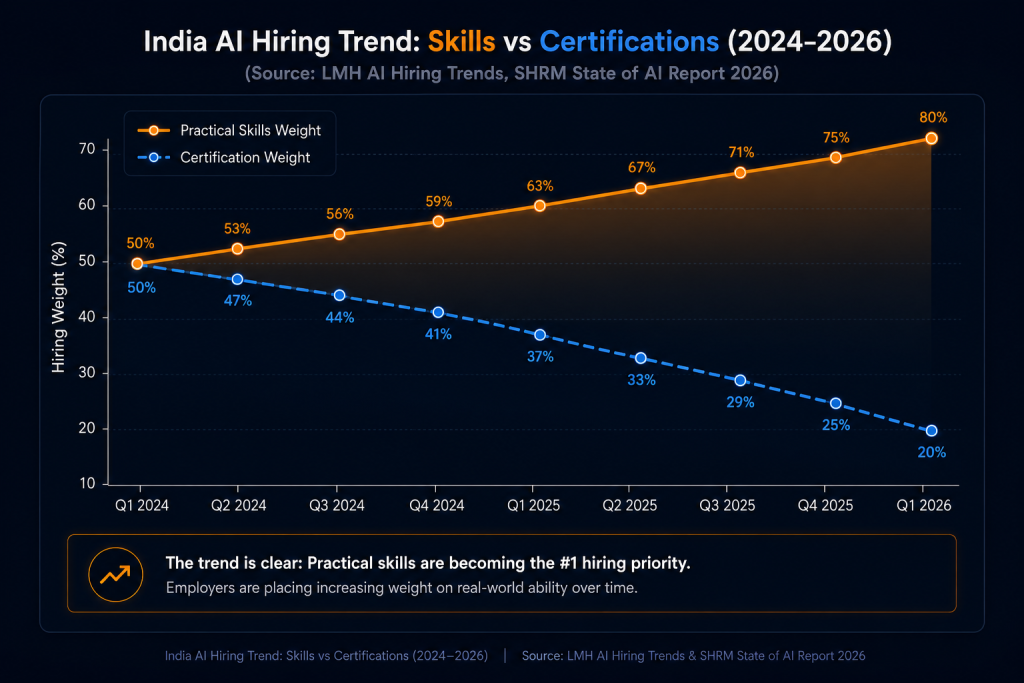
The strongest candidates usually have both, but they use certifications as support and practical projects as proof.
Best Practices to Become Job-Ready in AI
If you really want to get a job, in Artificial Intelligence you should make a profile that shows what you can do not what you know. First learn the basics of Artificial Intelligence. Then work on some projects that use Artificial Intelligence. After that explain these Artificial Intelligence projects in a way so everyone can understand them.
| Best practice | What to do |
| Learn fundamentals | Understand ML, deep learning, transformers, prompting |
| Build real projects | Create systems that solve real problems |
| Show deployment | Publish demos or working apps |
| Measure outcomes | Add evaluation, metrics, and results |
| Document your work | Explain the problem, solution, and impact |
| Keep it relevant | Align projects with the roles you want |
Common Mistakes AI Learners Make
A lot of people who are learning spend much time getting certificates and not enough time actually building things. Some people just copy what they see in tutorials. That does not show that they can think for themselves. The problem is that employers can usually tell when a project is a copy or when it is not finished or when it does not really help a business with something it needs.
Employers can tell when a project is just not very good and that is because the person who made it did not put in the time to build something like a project that helps a business with a real business need and that is what the learners should be doing they should be building projects that help businesses, with real business needs.
| Mistake | Why it hurts |
| Certificate collecting without projects | Weak proof of job readiness |
| Tutorial-only learning | Lacks originality |
| No deployment | No evidence of production awareness |
| No evaluation | Shows shallow understanding |
| No problem statement | Makes the project look random |
| Weak explanation | Makes interviews harder |
The best approach is to build with intent, show outcomes, and connect each project to a real use case.
Frequently Asked Questions
Q1. Are artificial intelligence certifications really useless?
No artificial intelligence certifications are not useless. Artificial intelligence certifications can help you get started with something learn how things are structured and show that you are committed to the topic of intelligence. The main limitation of intelligence certifications is that they usually do not prove that you can solve real problems on your own. That is why artificial intelligence certifications work best as something that supports what you are saying than the main reason you get hired for a job that involves artificial intelligence.
Q2. Do employers in India like skills than certificates?
Yes most employers in India like skills when the job needs someone to actually do the work. This is very true for jobs that have to do with Artificial Intelligence, GenAI and machine learning, where employers need people who can build, test and make systems better that work in business situations.
Q3. Can I get a job that has to do with Artificial Intelligence if I have done projects but do not have a certificate?
Yes especially if the projects you have done are good and related to the job. If you have a collection of your work that’s easy to understand and has examples that people can try out and you have a place like GitHub where people can see your work and you can explain the problems you were trying to solve this can be more convincing to employers than just a list of certificates. Employers in India prefer skills, over certificates when they are looking for people to work on Artificial Intelligence and machine learning roles.
Q4. When it comes to projects what really impresses hiring managers?
Hiring managers are impressed by projects that solve problems that businesses face. For example projects like RAG systems, AI assistants and automation workflows are great. Other good examples include tuned domain models, monitoring dashboards and multimodal applications.
Q5. So what should new graduates do first?
New graduates should start by learning the basics well. Then they should start working on projects as soon, as possible. If they have a portfolio that shows they have learned things in a way and can apply that knowledge it can help them compete with people who have more experience.
Q6. If people who have jobs want to start working with Artificial Intelligence what should they do?
People who have jobs and want to work with Artificial Intelligence should think about the things they’re good at that can be used in Artificial Intelligence then they should work on Artificial Intelligence projects that show they can do the jobs they want. They should also learn about the part of Artificial Intelligence that involves making things that people can use because the people who hire workers like to hire people who know how to make things that work.
Q7. Why do the people who hire workers care much about the skills that workers have from actually doing things?
The people who hire workers care about the skills that workers have, from doing things because these skills make it less risky to hire someone. If someone who is applying for a job has already made something that’s useful the person who is hiring workers feels more confident that this person can do good work and handle problems that happen in the real world.
Final Summary: What Employers Actually Prefer?
When it comes to hiring people who work with Artificial Intelligence employers usually like to see that they have skills. This is because skills show that you can actually solve problems and build things that’re useful. Certifications are still good to have especially when you are just starting out because they show that you know the basics and that you are serious about what you do. Certifications are most useful when you also have projects that you have worked on and experience with actually putting things into use.
For people in India who want to learn about Artificial Intelligence, the best way to do this is to learn by doing. This could be people who just graduated people who already have a job, software engineers, data scientists Machine Learning engineers or people who want to switch to a career. The best way to get started is to find a program that lets you learn by working on projects and getting help from someone who knows what they are doing. This is why a program like AI Engineering Mastery is a choice. It focuses on learning by doing working on projects getting help from mentors and getting certified based on how you do.
The question is not whether certifications are important or not. The question is whether you can actually do what you say you can do. Employers want to hire people who can get things done and make things that’re useful. This is why having skills is the most important thing when it comes to getting a job in Artificial Intelligence. Artificial Intelligence careers are all, about being able to do things not just knowing about them. So it is really important to have Artificial Intelligence skills that you can use to solve problems and build things.
Learn more about How AI Automation Is Transforming Modern Workplaces in India(2026)
Stay updated with the latest AI, Data Science, and Automation insights by following OneLeap on LinkedIn and Instagram.

Leave a Reply