

Introduction
How to become a data analyst in India is one of the most searched career questions in 2026. The good news is that you don’t need prior experience or a coding degree to get started. By building business thinking, mastering Excel, SQL, Python, and Power BI, and learning to work with AI-powered tools, you can develop the skills employers are looking for. This complete 9-step guide shows beginners the fastest path to becoming a successful data analyst and avoiding common career mistakes.
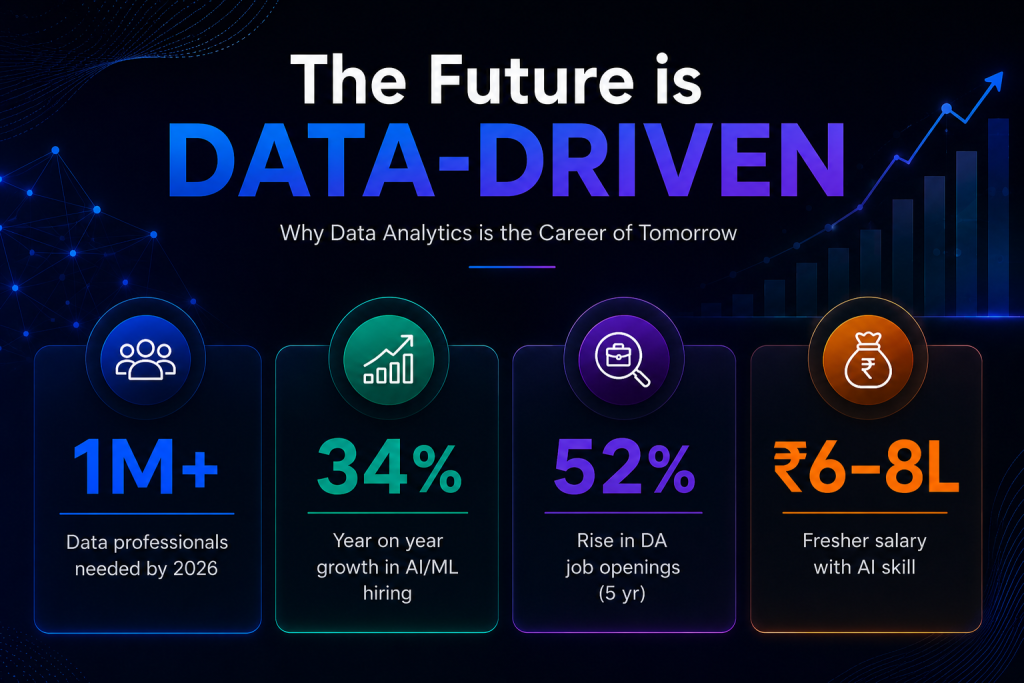
Table of Contents
- How to Become a Data Analyst in India: Understanding the Role of a Data Analyst
- Why Learning How to Become a Data Analyst in India Matters in 2026
- How to Become a Data Analyst in India: 7-Step career roadmap
- Core Skills Required to became a data analyst in India
- Essential Tools to Become a Data Analyst in India
- Real-World Examples
- Learning Path Comparison
- Best Practices to Become a Data Analyst in India Faster
- Common Mistakes When Learning How to Become a Data Analyst in India
- FAQs About How to Become a Data Analyst in India
- Final Summary
Key Takeways
- No engineering degree required logical thinking and a structured learning path are enough to break into data analytics.
- AI fluency prompt engineering and Generative AI is the single biggest differentiator for data analyst jobs in India in 2026.
- Every organisation looks for the same four core tools: Excel, SQL, Python, and Power BI.
- A real-projects portfolio can get you hired. A stack of certificates cannot.
- Freshers with AI skills and a strong portfolio can target ₹6–8 LPA at their first job 25–35% above peers without these skills.
- India will need over 1 million data professionals by 2026. The talent gap is real and works in your favour.
How to Become a Data Analyst in India: Understanding the Role of a Data Analyst
A data analyst is a professional who collects, cleans, and interprets raw data to help organisations make better decisions. They answer questions that matter to real business problems why did revenue drop last month, which customers are most likely to leave, which product is underperforming in which city.
In 2026, the role has evolved significantly. A data analyst is no longer just a reporting function. They are AI powered decision makers who use tools like Python, Power BI, and Generative AI to surface insights faster and with greater accuracy than traditional methods ever allowed. The analysts who understand this shift are the ones getting hired and getting paid more.
Why Learning How to Become a Data Analyst in India Matters in 2026
India is becoming one of the world’s largest hubs for data and analytics talent. Sectors including BFSI, e-commerce, healthcare, retail, and IT services are actively recruiting and struggling to find people who can actually do the work, not just talk about it.
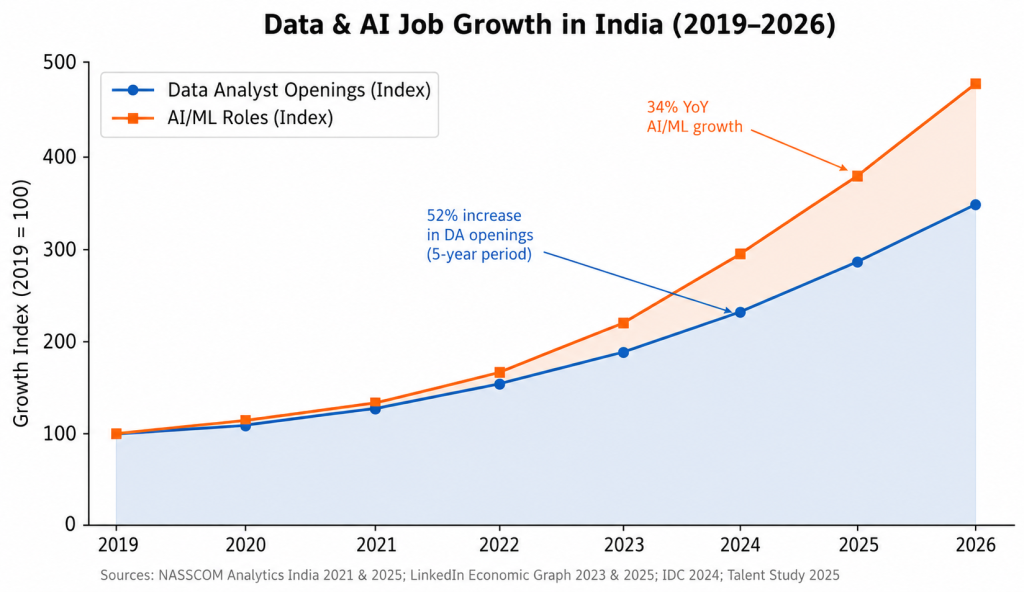
Figure 1: Data Analyst and AI/ML Job Growth in India, 2019–2026 (Index: 2019 = 100)
Sources: NASSCOM Analytics India Report 2025; LinkedIn Economic Graph India 2025; IDC India Talent Study 2025
According to recent reports from NASSCOM AI and ML hiring in India is growing at approximately 34% year-on-year, making it one of the fastest-growing job sectors in the country. Data analyst job openings have increased by 52% over the past five years. India needs over 1 million data professionals by 2026, and salaries are rising sharply due to the shortage of skilled talent.
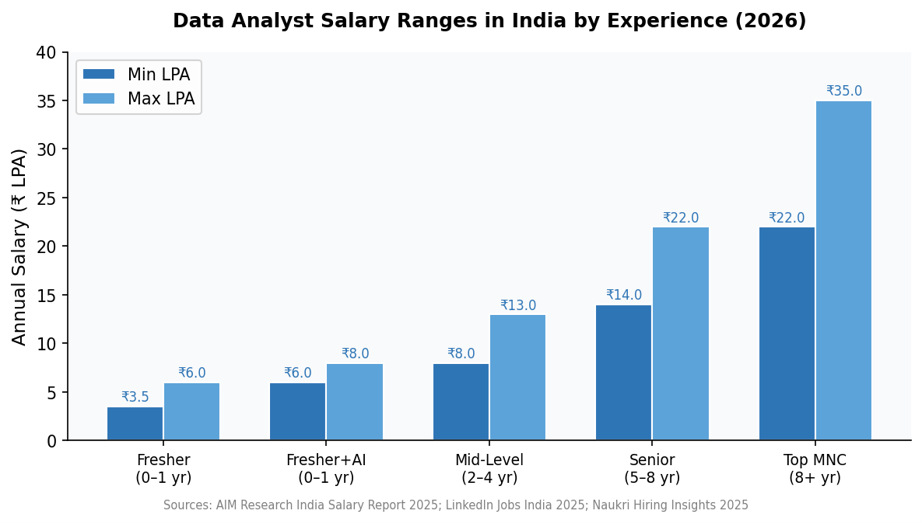
Figure 2: Data Analyst Salary Ranges in India by Experience Level (₹ LPA, 2026)
Sources: AIM Research India Salary Report 2025; Glassdoor India Compensation Survey 2025; Naukri Salary Insights Q1 2026
For someone starting fresh, this is a genuine opportunity. Salaries for freshers range from ₹3.5 to ₹6 LPA, rising to ₹6–8 LPA for candidates who have AI skills and a real portfolio. Senior analysts with 5–8 years of experience earn ₹14–22 LPA, and top MNC roles go significantly higher. The gap between analysts who use AI and those who do not is already visible in compensation and it is widening every quarter.
How to Become a Data Analyst in India: 7-Step career roadmap
Step 1 — Build Business Thinking First
Before opening Excel or writing a line of SQL, learn how businesses create value. Understand what KPIs are, how decisions get made, and what questions data is actually being used to answer. This is the step most courses skip and the reason many technically trained analysts fail in interviews. Learn to separate a business problem from an analytical problem.
Step 2 — Learn Statistical Thinking
You do not need a mathematics degree. You need to understand correlation vs causation, what sampling bias is, and how to evaluate whether a pattern in data is real or coincidental. This is the skill that makes your analysis credible and it is what lets you critically evaluate AI generated outputs rather than accepting them blindly.
Step 3 — Get Comfortable With AI and Prompt Engineering
| This is the defining skill of 2026. Learn how Generative AI and large language models work, how to write effective prompts, and how to use AI assistants to speed up data cleaning, analysis, report writing, and insight generation. Analysts who use AI well work significantly faster and employers can see it immediately. |
Step 4 — Learn Core Analytical Tools
Excel for cleaning and summarising data. SQL for querying databases. Python with Pandas and NumPy for handling large datasets and exploratory analysis. Work through them in sequence. AI tools make this learning dramatically faster than it was two years ago.
Step 5 — Master Data Visualisation and Storytelling
Numbers inform decisions, but people make them. Develop Power BI skills to create dashboards that executives can easily understand. Practice translating your analysis into a clear narrative. The ability to explain what the data says and why it matters is one of the most consistently undervalued skills among beginners and most consistently sought after by hiring managers.
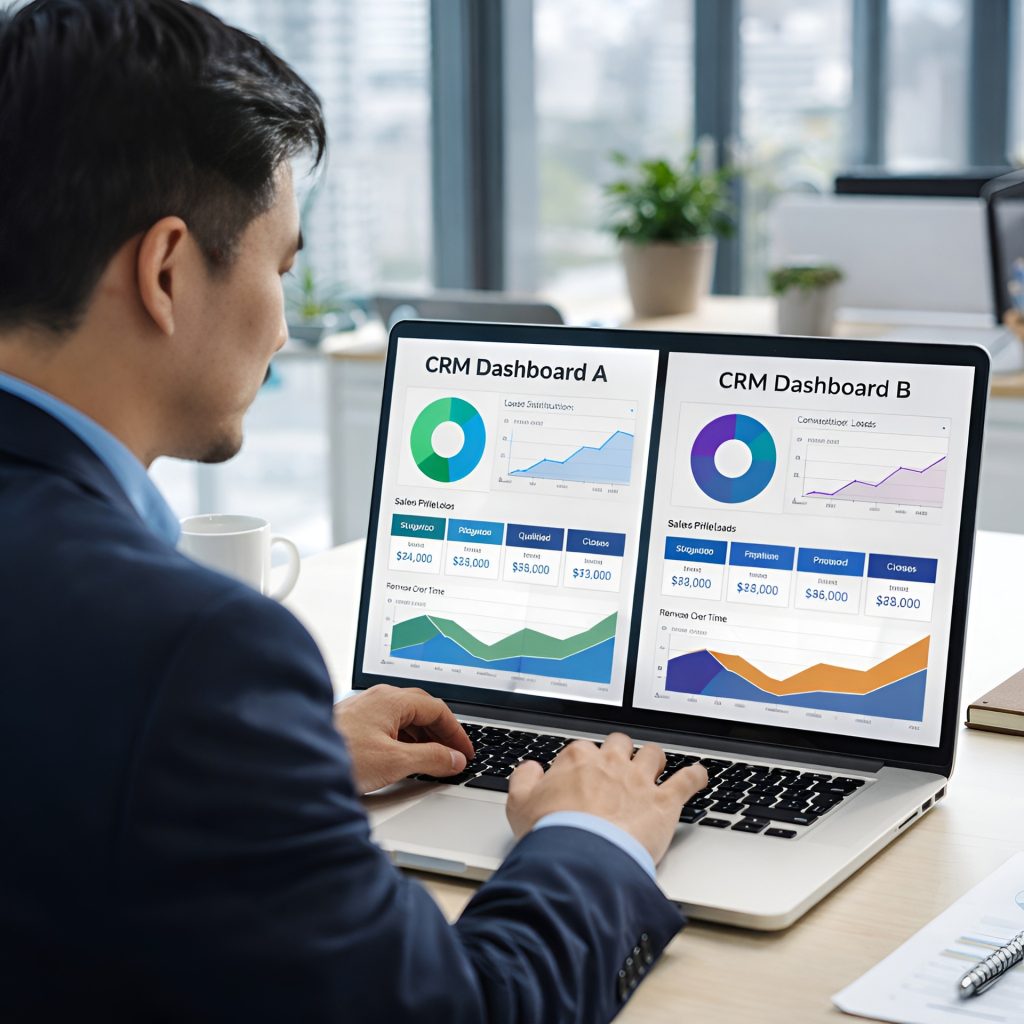
Step 6 — Build a Real Portfolio
Do not wait until you feel completely ready. Start creating projects on real datasets like sales data, customer data, marketing funnels. Track the problems you analysed, your key findings, and the actions the business should take. Four to six well documented projects are worth more than any certification.
Step 7 — Apply and Prepare for Interviews
Enhance your LinkedIn profile with AI keywords. Learn SQL and Python for technical rounds. Present your projects through the lens of business impact rather than technical detail. Practice mock interviews and build your presentation skills before you face real hiring managers.
Core Skills Required to became a data analyst in India
| Skill | What It Means | Why It Matters in 2026 |
| Business Acumen | Understanding business models, key metrics, and how data influences revenue, cost, and customer decisions. | Even technically accurate analysis fails without business context. |
| Statistical Judgment | Knowing when a pattern is meaningful vs noise. Understanding bias, variance, and significance. | Makes your analysis credible and lets you question AI generated outputs. |
| AI Fluency & Prompt Engineering | Using Generative AI tools to speed up SQL writing, insight summaries, and data cleaning. | The differentiator that determines who gets the offer in 2026. |
| Technical Tool Proficiency | Hands-on expertise with Excel, SQL, Python, and Power BI. | These four tools appear in over 90% of DA job descriptions in India. |
| Data Storytelling | Transforming insights into executive ready dashboards and clear narratives. | The bridge between analysis and actual business impact. |
| Predictive Thinking | Basic forecasting, trend analysis, and using no-code AutoML tools. | Moves you from a reactive reporter to a strategic contributor. |
Essential Tools to Become a Data Analyst in India
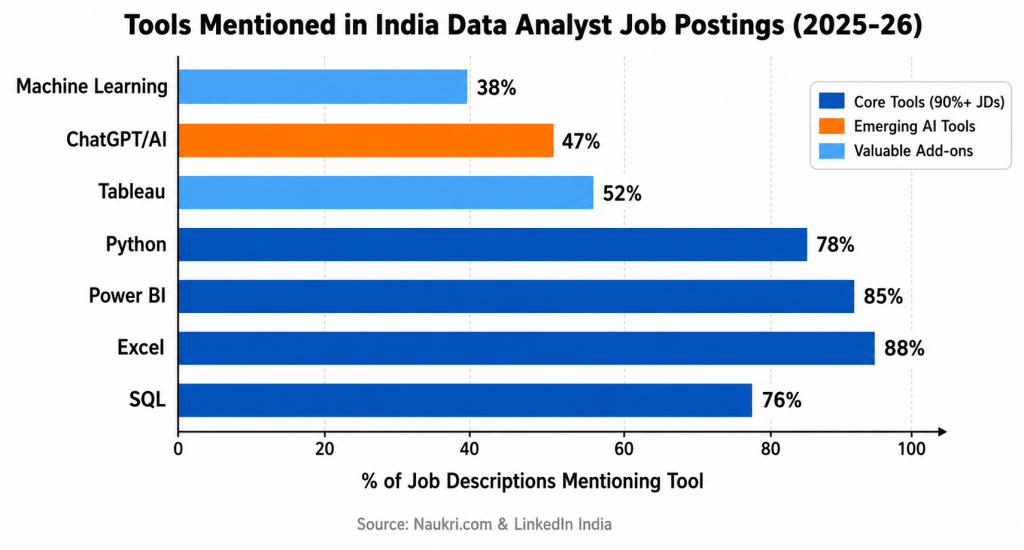
Figure 3: Tools Mentioned in India Data Analyst Job Postings (2025–26)
Source: Naukri.com & LinkedIn India Job Scan, Q1 2026 — analysis of 8,400+ Data Analyst postings⁷
| Tool | What It Does | Why Analysts Need It |
| Notebook LM | Upload internal reports and query them in natural language. | Extract insights from documents without reading everything manually. |
| Cursor | AI powered code editor for Python and SQL. | Essential for non programmers who write and fix code without memorising syntax. |
| n8n | Automate repetitive data workflows without heavy engineering. | Connect apps and data sources; schedule pipelines independently. |
| Stream lit | Turn Python scripts into shareable interactive web apps. | Business stakeholders can use your analysis without technical knowledge. |
| Lang Chain | Build RAG systems connecting AI to internal company data. | Enable natural language queries across business databases and documents. |
| Auto ML (No-Code) | Build predictive models without writing ML code. | Platforms like Google Vertex AI or Azure Auto ML make forecasting accessible. |
Real-World Examples
E-Commerce — Customer Churn Analysis
A data analyst at a Bengaluru based D2C brand uses Python and SQL to analyse customers who have not purchased in 60 days, segment them by order value history, and flag the high value segment for a personalised win-back campaign. The analysis directly reduces revenue loss from lapsed customers.
Financial Services — Credit Risk Monitoring
An analyst at an NBFC in Mumbai uses Power BI to build a live dashboard tracking loan repayment behaviour by geography and product type. The dashboard refreshes daily and flags accounts moving toward default by giving the collections team a prioritised call list every morning.
Marketing — Campaign ROI Tracking
A marketing analyst at a fintech startup uses SQL to pull campaign spend data and Python to merge it with conversion data from the CRM. The result is a clear attribution model showing which channels are generating actual paying customers versus which generate clicks that never convert.
Learning Path Comparison
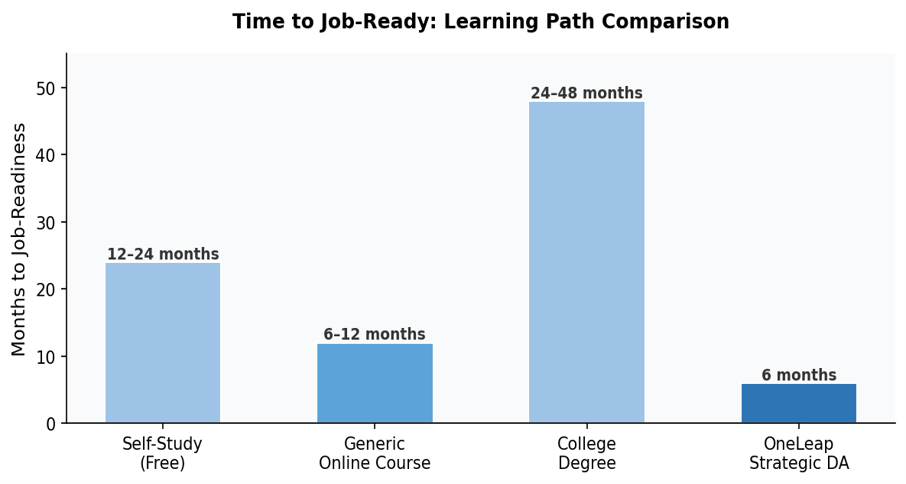
Figure 4: Time to Job-Readiness Across Different Learning Paths
| Feature | Self-Study | Generic Course | College Degree | OneLeap Strategic DA |
| Time to Job-Ready | 12–24 months | 6–12 months | 2–4 years | 6 months |
| AI Skills | Rarely included | Occasionally | Almost never | Core focus throughout |
| Real Projects | Self-made, no feedback | Guided, sanitised | Academic only | 7 projects with feedback |
| Business Thinking | Not covered | Rarely covered | Partially covered | Module 1 foundation |
| Mentorship | None | Forum only | Professors | Weekly 1 on 1 with practitioners |
| Coding Required | Depends on path | Varies | Yes | No zero code barrier |
| Weekend-Friendly | Yes | Yes | No | Yes on Sat & Sun only |
| Career Support | None | Limited | Placement cell | Resume, LinkedIn, mock interviews |
| Instructors | Content creators | Variable quality | Academics | Ex-AmEx, Morgan Stanley, L&T Finance |
Best Practices to Become a Data Analyst in India Faster
- Lead with business impact in every project. Start with the outcome, then explain the analysis that made it possible. Hiring managers care about outcomes first.
- Integrate AI tools from day one. Don’t wait until you feel ready to use ChatGPT or Cursor. Build the habit early, analysts who use AI naturally in their workflow stand out immediately in interviews.
- Work on messy, real-world datasets. Avoid clean textbook examples. Use datasets from Kaggle, data.gov.in, or your own workplace and work with the inconsistencies real data always contains.
- Document every project as a business story. For each project: what was the business question, what did you find, and what should the business do because of it. This is exactly what interviewers ask about.
- Optimise your LinkedIn profile for 2026 hiring. Feature keywords like Generative AI, prompt engineering, Power BI, Python for data analysis, and AI powered analytics. Recruiters and ATS systems actively scan for these terms.
- Practice mock interviews before applying. Practice presenting your projects out loud to a mentor, a peer, or a camera. The ability to explain your thinking clearly is tested in every analytics interview.
- Apply before you feel completely ready. Most people over prepare and under apply. If you have four to five projects and working knowledge of the core tools, start applying. Interview feedback is the fastest form of learning.
Common Mistakes When Learning How to Become a Data Analyst in India
| Mistake | Why It Happens | Why It Hurts You | What to Do Instead |
| Collecting certificates instead of projects | Feels like progress without discomfort | Employers evaluate your work, not certificates | Build 4–6 real projects before applying |
| Learning tools without business context | Courses teach syntax, not application | You write SQL but can’t answer a business question | Always frame learning around a real business problem |
| Ignoring AI tools | Feels unnecessary or overwhelming | Analysts using AI work 10× faster, you fall behind | Integrate ChatGPT and Cursor from week one |
| Using AI outputs without verification | AI makes it easy to generate answers quickly | Wrong AI insight presented as fact destroys credibility | Always validate AI outputs against your own data understanding |
| Skipping data storytelling | Technical skills feel more important | Analysis that cannot be communicated has zero value | Practice translating every analysis into a 3-sentence narrative |
| Waiting until fully ready to apply | Perfectionism and lack of confidence | You miss months of interview feedback that would accelerate growth | Apply when you have 4+ projects and core tool proficiency |
| Building only on clean, toy datasets | Clean data is easier and less uncomfortable | Interviewers immediately spot the lack of real-data experience | Use Kaggle competition or industry datasets with real inconsistencies |
Frequently Asked Questions
Q1:Can I become a data analyst as a fresher in India?
Yes. No coding background is required to start. What matters is logical thinking, willingness to learn, and a structured path covering business thinking, SQL, Python, Power BI, and AI tools. Employers in 2026 hire based on portfolio projects and demonstrated skills, not prior job titles or degrees. OneLeap‘s program requires no coding experience and is built specifically for people making this transition.
Q2:What is the starting salary for a fresher data analyst in India in 2026?
Freshers typically earn between ₹3.5 and ₹6 LPA. Candidates with AI skills and a strong portfolio can target ₹6–8 LPA at their first job. Cities like Bengaluru, Hyderabad, and Delhi NCR pay 15–18% above the national average. Adding Python, Power BI, and Generative AI skills can elevate your salary 25–35% above peers with the same years of experience.
Q3:How long does it take to become job-ready from scratch?
With a structured, expert-led program: 4–6 months. Self-studying without guidance typically takes 12–24 months and frequently leaves gaps in business understanding that interviews quickly expose. OneLeap’s Strategic Data Analyst with AI program gets you job-ready in 6 months through weekend-only classes, 70+ live hours, 7 real projects, and weekly one-on-one mentorship.
Q4:Do I need a computer science or engineering degree?
No. In 2026 employers are more interested in what you can demonstrate than in where you studied. A portfolio of real projects, hands-on tool knowledge, and the ability to answer business questions with data are what get you hired. Many successful data analysts come from commerce, arts, science, and non-technical professional backgrounds.
Q5:What is the single most important skill for a data analyst in India in 2026?
Business thinking the ability to connect data to a real business decision. Technical skills are table stakes. What separates analysts who get promoted from those who stay in reporting roles is the ability to frame the right question, not just answer the one they were given. AI fluency is the fastest growing technical differentiator, but it sits on top of business judgment, not the other way around.
Q6:Is AI going to replace data analysts in India?
No. AI is replacing analysts who do not use AI. Demand for data analysts in India grew 34% year on year in AI related roles. Analysts using AI tools are doing better work faster and are valued more highly. The roles being automated are narrow, repetitive reporting tasks not strategic analysis, business judgment, or stakeholder communication. Learning to work with AI is the best job security available in this field right now.
Final Summary
Becoming a data analyst with no experience in India in 2026 is entirely achievable and the job market is actively waiting for people who do it right. The roadmap is clear: start with business thinking, build your technical foundation across Excel, SQL, Python, and Power BI, add AI fluency through prompt engineering and Generative AI tools, and prove your skills with a portfolio of real projects that employers can actually evaluate.
The differentiator in 2026 is not just knowing the tools it is knowing how to apply them to real business problems with AI assistance. That combination is what OneLeap’s Strategic Data Analyst with AI program is built to deliver: 7 modules, 7 real projects, weekly one-on-one mentorship, and AI woven into every step all in 6 months of weekend-only classes designed for working professionals and career-switchers starting from zero.
Sources
1.LinkedIn Economic Graph
2.AIM Research
3.Naukri Hiring & Salary Insights
4.Kaggle
Stay updated with the latest AI, Data Analytics, and Automation insights by following OneLeap on LinkedIn and Instagram.

Leave a Reply